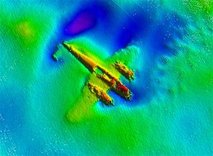
A rare World War Two German bomber, shot down over the English Channel in 1940 and hidden for years by shifting sands at the bottom of the sea, is so well preserved a British museum wants to raise it. The Dornier 17 – thought to be world’s last known example – was hit as it took part in the Battle of Britain. It ditched in the sea just off the Kent coast, southeast England, in an area known as the Goodwin Sands. The plane came to rest upside-down in 50 feet of water and has become partially visible from time to time as the sands retreated before being buried again. Now a high-tech sonar survey undertaken by the Port of London Authority (PLA) has revealed the aircraft to be in a startling state of preservation. (via Nazi warplane lying off UK coast is intact – Yahoo! News)

Read more

It was the first photograph taken of the whole round Earth and the only one ever snapped by a human being. You can’t see the Earth as a globe unless you get at least twenty thousand miles away from it, and only 24 humans ever went that far into outer space. They were the three-man crews of the nine Apollo missions that traveled to the moon between 1968 and 1972, six of which landed there successfully (three men went twice). But only the last three saw a full Earth.

(The true camera image is upside-down by earthly standards, showing the South Pole at the top of the globe, because the camera was held by a weightless man who didn’t know down from up. Most reproductions invert it to align with our expectations.)

Most people who glanced out the window and saw something like that would be distracted no matter how busy they were. That’s what happened on Apollo 17 when the spacecraft was some 28,000 miles from Earth and crossing the path between it and the sun. All three men aboard had mission-critical tasks to perform at the time, tasks they had simulated hundreds of times on the ground. Tasks they could almost do automatically. And they weren’t immune to astonishment.

After the picture became famous all three remembered seeing that remarkable sight and each was pretty sure they had snapped the shot. NASA policy is to credit the entire crew for all mission photography, so there is no official position. Ron Evans died in 1990 without relinquishing his claim, and forty years later there is still a running argument between Cernan and Schmitt about who took the Blue Marble Shot. Those four decades have shown it to be the most significant thing they brought back from their expedition, far more meaningful than the moon rocks they gathered, so it matters to them. A lot.

From The Blue Marble Shot: Our First Complete Photograph of Earth – Al Reinert – Technology – The Atlantic

Read more
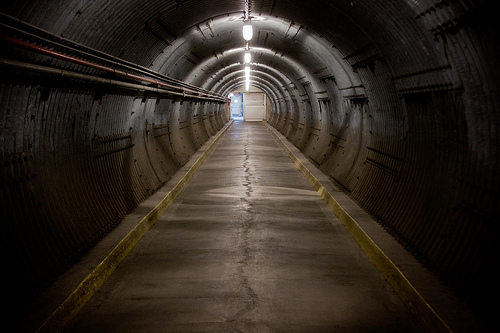
Diefenbunker (by amy allcock) a huge four-storey underground bunker that was designed to house crucial elements of the Canadian government during the Cold War in the event of a nuclear strike. The bunker is named after former Canadian Prime Minister John Diefenbaker and is now open to the public as a museum.

Read more

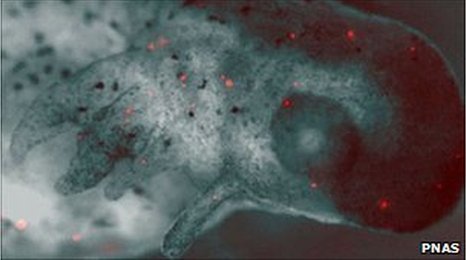
It was already known that green algae lived inside the eggs of this species – the spotted salamander (Ambystoma maculatum), which is very common in North America.

Although these salamanders only emerge from beneath the ground to hunt and breed, they lay their translucent eggs in ponds, where they are suspended near the surface. This makes an ideal, sunny and protected environment for the algae.

“The eggs actually look green because the algae is inside the egg capsules,” explained Dr Ryan Kerney of Dalhousie University, who led the research.

“The algae inside the egg capsules provide oxygen to the embryo and the algae gets waste from the embryo [which is rich in the nitrogen the plant needs].”

Although this relationship had been known about for more than a century, scientists did not understand how the algae got into the egg.

from BBC – Earth News – Plant lives inside animal: algae invade amphibian cells

Read more

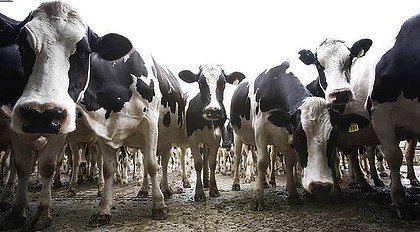
Writing in the journal Public Library of Science One, the researchers said they were able to create cows that produced milk containing a human protein called lysozyme, which is found in large quantities in human breast milk and helps to protect infants from bacterial infections. (via Genetically modified cows produce human milk)

Read more