
Read moreMolly from Neuromancer looks like this to me. With obviously more…form-fitting shades.

What you need to know is that your city – pretty much wherever it is – was built for a climate that it may no longer have. That’s going to mean tough commutes during the winter and spending more money on air conditioning in the summer. It’s going to mean that your city shuts down more often because some freaky thing happened that no one can remember happening in their lifetimes. It’s going to mean the power’s going to go out because the electric system in your area wasn’t designed to handle the stresses it will be put under. Cities will have to get less efficient and more resilient. Redundancies will have to be built into systems that previously seemed to work just fine.
This is how climate change will cost us all money. Maybe more importantly, these kinds of storms can cost politicians elections, which might be the only thing that will start pushing them to make the hard, long-term decisions to adapt to a changing climate. And when the costs of those changes become apparent maybe climate legislation won’t seem like a strange, extraneous tax but like the necessary corrective that it is.
Or maybe we’ll just stop carping about the overwhelmed mayor and all just get used to scenes like this (above)
Read more
screencap from the third ep of the 1960 show Danger Man, starring Patrick McGoohan.
No, it’s not an iPod, it’s the receiver for an audio device he uses to make a blind woman ‘see’. The cord leads to an amplifier she fits in her ear and hides the cord itself under her hair. 1960s high-tech!
iPod in 1960? (by M1K3Y)
Read more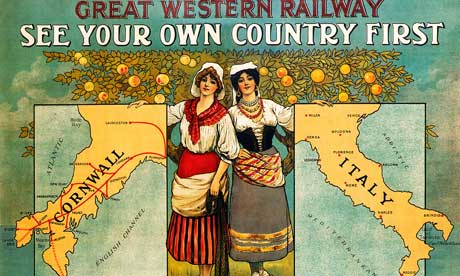
Researchers at Birmingham, Loughborough and Nottingham universities, working with transport bodies, are looking at scenarios 40 years ahead, taking in the social, political, economic and engineering consequences for UK road, rail and air networks. They will focus on the London-Glasgow corridor, where a new high-speed rail link is already planned, but draw out lessons for elsewhere.
The Network Rail report says it “is looking to identify geographical areas that might benefit in some ways from climate change. For example, coastal areas may experience longer, warmer summers, and this may lead to tourism and leisure opportunities and increased demand for rail, and perhaps reusing decommissioned routes or developing new lines, in the longer term. This is something that could be developed in the future with local authorities within their future travel and tourism plans.”
One researcher involved in the project suggested possibilities could include more light rail projects, the addition of new stops on intercity lines and the re-inclusion of popular destinations such as Falmouth on direct routes.
Network Rail, whose infrastructure has struggled with two winters of heavy snow, strikes another optimistic note: fewer cold winter days may also “lead to a more reliable infrastructure and operations and fewer accidents on the railway for staff and passengers… such as a reduction in slips and falls from icy platforms, station entrances and exits, depot access walkways and roads.”
Natural England, meanwhile, sees a possible silver lining for commercial sea fishing – not just from warm water species moving into the North Sea, but also from less carbon-hungry ships, refrigeration of catches and transport, and more selective fishing gear, as the concept of “fish miles” follows that of food miles.
Read more



 The Committee to Nuke Elysium