
demotivational poster CYBERPUNK NOW!
Read more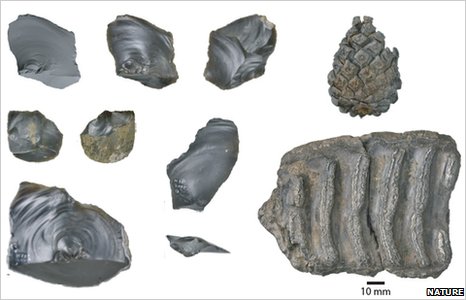
The discoveries were made in Happisburgh, in the north of Norfolk. At the time there was a land bridge connecting what is now southern Britain with continental Europe.
There are no early human remains, but the researchers speculate that the most likely species was Homo antecessor, more commonly – and possibly appropriately – known as “Pioneer Man”.
Remains of the species have been found in the Atapuerca region of northern Spain, and dated to 0.8-1.2 million years ago. So the species could well have been in Britain at around that time, according to Professor Chris Stringer of the Natural History Museum in London.
“If the climate was good and the land bridge was there, there’s no real reason they couldn’t have come (to Britain) as far back as 1.2 million years ago,” he told BBC News.
…
Pioneer man was eventually wiped out by an Ice Age. These occurred about every 100,000 years, and each time that happened Britain was depopulated.
As conditions became more benign, a new group of humans arrived.
There were at least eight different waves of people that came in and died out before the last wave, which is the one that survives today.
(via BBC News – Humans’ early arrival in Britain)
Read more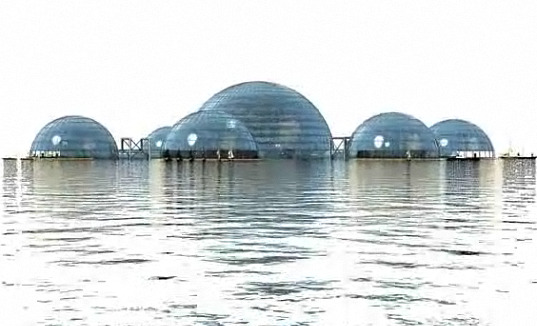
Designer Phil Pauley has a dream: he wants to build a new biosphere, but instead of putting it on solid ground, he wants to put it in the middle of the ocean. He envisions a scientific utopia, one that could work either floating on the surface or down in the watery depths.
His design consists of eight living biomes surrounding one larger, central biome full of control equipment. The smaller biomes would be where people would live and experiments would take place. And through an “innovative control of variant atmospheric pressures that occur at depth,” the entire thing would be self-sustainable, generating its own electricity and other resources. (via Hey, James Bond villains: here’s how you build an ocean fortress | DVICE)
Read more






 The Committee to Nuke Elysium