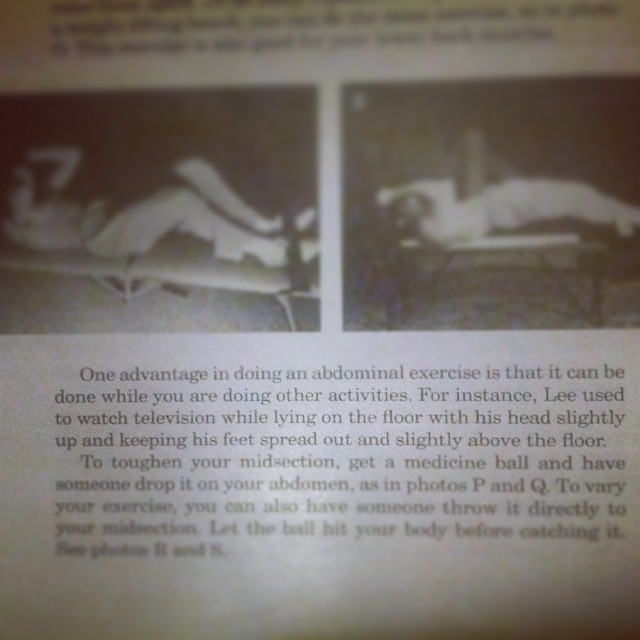
Training montage… #becohlelikebrucelee
Read more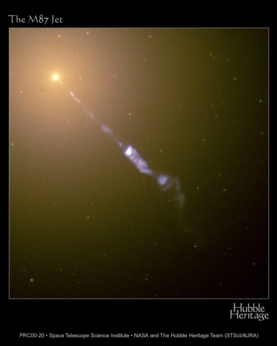
M87 possesses an enormous number of tightly packed star clusters called globulars. Whereas the Milky Way has about 160 known globular clusters M87 boasts some 10,000. Moreover, M87’s center has a black hole that dwarfs the Milky Way’s, weighing six billion to seven billion times more than the sun, over a thousand times as massive as the four-million–solar mass black hole occupying the Milky Way’s center…
If M87’s black hole actually consists of two black holes orbiting each other, they could fling away a star cluster that strayed too near. The cluster’s gravity causes the two black holes to get a little closer together, making them lose orbital energy that gets transferred to the star cluster.
Read more
Venera 13, a Soviet spacecraft, was the first lander to transmit color images from the surface of Venus. Although other landers arrived before and after it, pictures from Venera 13 tend to be more widely circulated because they are in color.
The spacecraft was designed to last about half an hour on Venus’ harsh surface, but sent back data for more than two hours after its landing March 1, 1982.
Since no lander has ventured on to Venus since the 1980s, the Venera program’s images of the surface stand as the best close-up record of the planet today.
Read more
“a colony of undersea humans repurpose dopey robots from the pre-electronics age into mech suits for the ocean floor”
Read more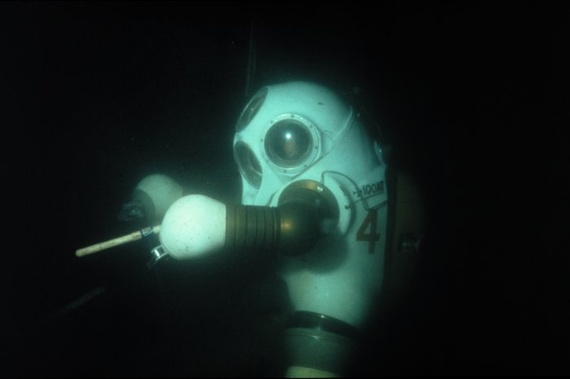
“This is gonna sound a little strange, but: You can’t see water. There is no splashing. There’s no nothing. It just felt like I was standing on an alien planet. I felt like I was on the surface of the moon. The water was so clear, it looked like a hazy atmosphere.”
Read more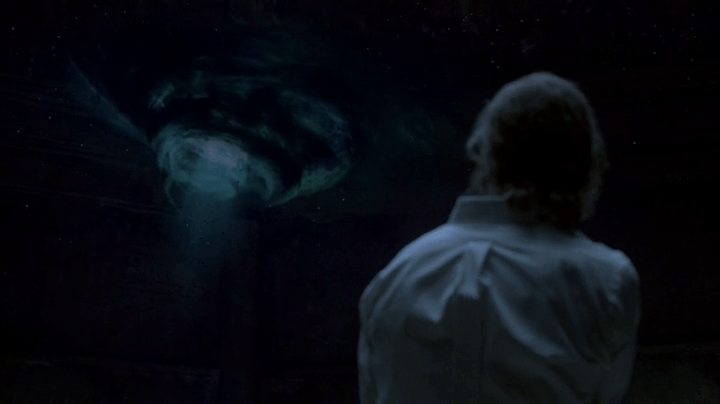




 The Committee to Nuke Elysium