new-aesthetic:

Google announces Project Tango, a smartphone that can map the world around it | The Verge

“Google has built a prototype Android smartphone that can learn and map the world around it. The device comes from a new initiative called Project Tango, and it’s ready to get the phone into developers’ hands to see what the technology is capable of. Google says that the phone will learn the dimension of rooms and spaces just by being moved around inside of them — walking around your bedroom, for example, would help the phone learn the shape of your home. The hope is that by creating a robust map of the world, Google’s phone could eventually give precise directions to any given point that needs to be reached.”

Taaaaaake it

Read more

warrenellis:

Facebook buys WhatsApp. A million people move to Telegram. You don’t know any of them. Welcome to the Dark Rural Homesteader Internet.

treading water in the seas of change…

Read more

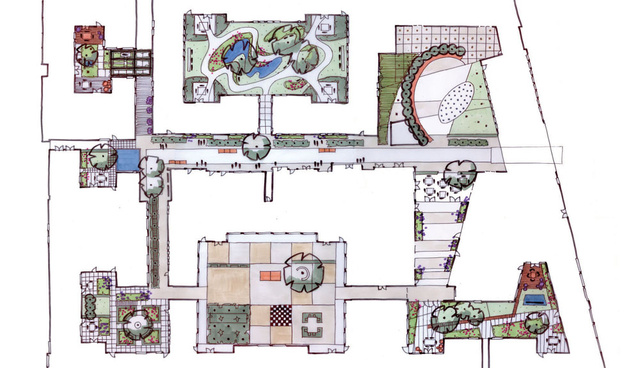
Hogeweyk, from a certain perspective, seems like a fortress: A solid podium of apartments and buildings, closed to the outside world with gates and security fences. But, inside, it is its own self-contained world: Restaurants, cafes, a supermarket, gardens, a pedestrian boulevard, and more.

The idea, explains Hogeweyk’s creators, is to design a world that maintains as much a resemblance to normal life as possible—without endangering the patients.

Hogeweyk, which opened in 2009, was the culmination of that work—but according toThe New York Times, interest from companies in other European countries and America might soon bring the same approach to our shores. In fact, in Switzerland, a similar “village” has already opened—this one mimics life in the 1950s. After all, the booming aging runs parallel to a boom in construction—thousands of nursing homes and new memory care units will be built over the next few decades. And how they’re designed could affect every person reading this.

What Hogeweyk reveals, though, is the culturally-ingrained way we distinguish between those who do and don’t suffer from dementia. By treating residents as normal people, Hogeweyk seems to suggest that there isn’t such a huge difference, deep down—just differing needs. By designing a city tailored to those unique needs, residents avoid the dehumanization that long-term medical care can unintentionally cause.

On the village’s site, a quote from Italo Calvino’s 1978 Invisible Cities drives it home: “They already have experienced a night like this, and they were happy then.”

Read more

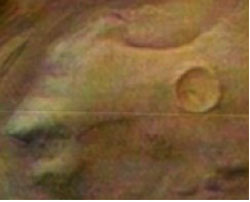
The irregular rims of these craters reveal that they are not the result of impacts by objects from space but rather have resulted from the act of creating the faces themselves. These art objects, which Basiago has named orb craters, are numerous in the ESA image. “Paranormal researchers will recognize in these works of art the faces found inside of orbs in the orbs phenomenon on Earth. Faces like these are sometimes found staring silently out from the orbs that are captured by digital cameras. The ubiquitous nature of these land forms in the vicinity of Ruell Vallis indicates how… the surface of Mars has been terra-formed into works of art that show a child-like simplicity and spontaneity.” One of these orb craters can be seen on the neck of a large terra-form featuring a barking dog lunging toward the channel of the Ruell Vallis. (via EXOPOLITICS: Politics, Government, and Law in the Universe: A “New Cydonia” of ancient extraterrestrial monuments found on Mars)

Read more

Mars-crossers that are also Earth-crossers or grazers

These objects are not catalogued as Mars-crossers in databases such as the Jet Propulsion Laboratory’s online Small-body Database Browser. Instead, they are categorized as Near Earth Objects (NEOs).

Read more

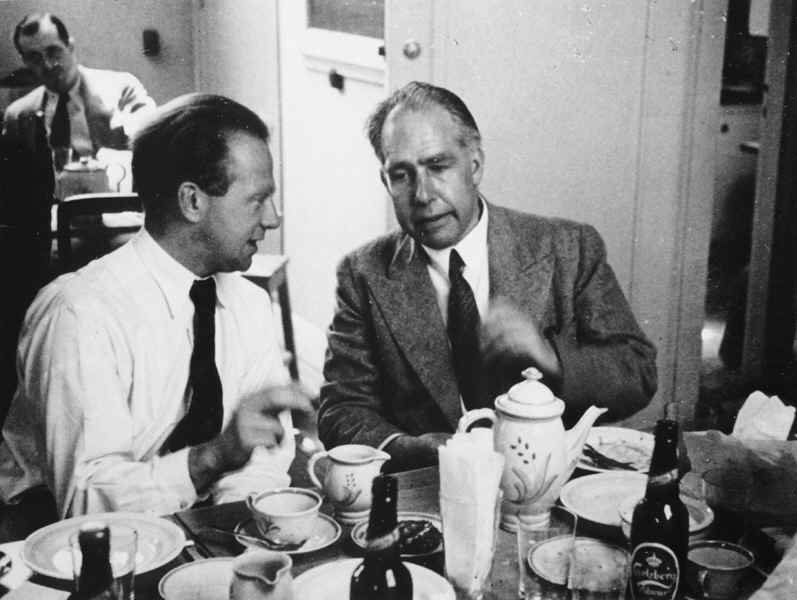
I remember discussions with Bohr which went through many hours till very late at night and ended almost in despair…

Can nature possibly be so absurd as it seemed to us in these atomic experiments?

Read more

To continue its investigation, the car-sized rover is on an expedition to roll up Mt. Sharp, the central peak of the large crater in which it landed. Life might have shown preference for water that once ran down the Martian mountain. Two weeks ago, to avoid more dangerous and rocky terrain, Curiosity was directed to roll across a one-meter high sand dune that blocked a useful entrance to Mt. Sharp. Just after the short trip over Dingo Gap was successful, the robotic rover took the above image showing the now-traversed sand mound covered with its wheel tracks.

Read more

Footprints left behind by what may be one our first human ancestors to arrive in Britain have been discovered on a beach in Norfolk.

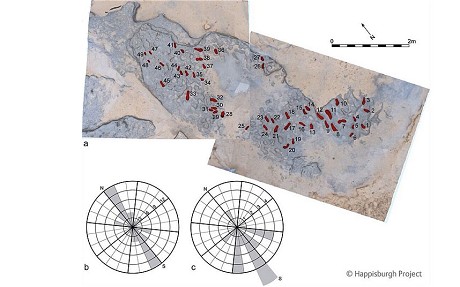
The preserved tracks, which consisted of 49 imprints in a soft sedimentary rock, are believed to be around 900,000 years old and could transform scientists understanding of how early humans moved around the world.

Anthropologists and evolutionary biologists from around the UK have been studying the tracks, and believe they may have been related to an extinct form of human ancestor known as Homo antecessor, or “Pioneer Man”.

The tracks include up to five different prints, indicating a group of both adults and children walked across the ancient wet estuary silt.

They are the earliest direct evidence of human ancestors in the area and may belong to some of the first ever Britons.

From their analysis of the prints, researchers believe the group were probably heading in a southerly direction over what would at the time have been an estuary surrounded by salt marsh and coniferous forest.

At the time Britain was connected to continental Europe by land and the site at Happisburgh would have been on the banks of a wide estuary several miles from the coast.

The estuary itself would have provided a rich array of plants, seaweed and shellfish. Fossils of mammoth, an extinct kind of horse and early forms of voles have also been found at the site Happisburgh.

The early humans could also have hunted or scavenged the grazing herds for meat.

The discovery of the footprints is particularly significant as there are few surviving tracks of human ancestors elsewhere in the world.

Scientists can glean large amounts of information about our ancestors, including the size of the groups they travelled in, how they walked, their size and weight.

The prints were discovered in deposits that have also revealed stone tools and fossilised bones dating to between 800,000 and one million years ago.

It is thought that the footprints may have belonged to a relative of a Homo antecessor – an extinct hominid species that may have been a common ancestor to both modern humans and Neanderthals, although such theories are still highly disputed.

Remains from Homo antecessor were discovered in the Atapuerca Mountains in Spain.

Professor Chris Stringer, an eminent anthropologist at the Natural History Museum in London who worked with the team, said: “The humans who made the Happisburgh footprints may well have been related to the people of similar antiquity fromi Atapuerca in Spain, assigned to the species Homo antecessor.

“These people were of a similar height to ourselves and were fully bipedal. They seem to have become extinct in Europe by 600,000 years ago and were perhaps replaced by the species Homo heidelbergensis.

“Neanderthals followed from about 400,000 years ago and eventually modern humans some 40,000 years ago.”

http://www.telegraph.co.uk/science/science-news/10623660/900000-year-old-footprints-of-earliest-northern-Europeans-discovered.html

Read more