kadrey:

The Largest Discovered Structure in the Universe Contradicts Big-Bang Theory Cosmology

“While it is difficult to fathom the scale of this "large quasar group” (LQG), we can say quite definitely it is the largest structure ever seen in the entire universe,” said Dr Clowes of University of Central Lancashire’sJeremiah Horrocks Institute. “This is hugely exciting – not least because it runs counter to our current understanding of the scale of the universe. Even traveling at the speed of light, it would take 4 billion years to cross. This is significant not just because of its size but also because it challenges the Cosmological Principle, which has been widely accepted since Einstein. Our team has been looking at similar cases which add further weight to this challenge and we will be continuing to investigate these fascinating phenomena…”

http://www.dailygalaxy.com/my_weblog/2013/11/the-largest-discovered-structure-in-the-universe-contradicts-big-bang-theory-cosmology-weekend-featu.html
Read more

interdome:

interdome:

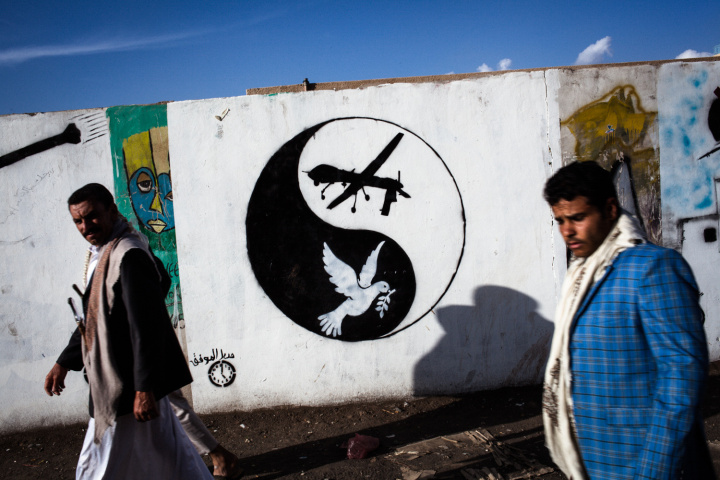
An American drone hovers along a main thoroughfare in the Yemeni capital, Sana’a. Not a real drone, but rather a 7 foot-long rendition of an unmanned aircraft spray-painted near the top of a whitewashed city wall. Below it, a stenciled-on child is writing: “Why did you kill my family?” in blood-red English and Arabic script.

Painted by Yemeni artist Murad Subay, the Banksy-esque mural sits beside three others also admonishing the United States’ use of drones in Yemen to track and kill terrorism suspects. This drone art is part of Subay’s latest campaign, “12 Hours”, which aims to raise awareness about twelve problems facing Yemen, including weapons proliferation, sectarianism, kidnapping and poverty. Drones are the fifth and arguably most striking “hour” yet completed.

“Graffiti in Yemen, or street art, is a new device to communicate with the people,” says Subay, 26, who after taking up street art two years ago in the wake of Yemen’s Arab Spring revolution has almost single-handedly sparked the growing Yemeni graffiti movement. “In one second, you can send a message.”

The anti-drone chorus in Yemen has grown louder since the Obama Administration took office in 2009. All but one of the dozens of reported drone strikes in Yemen have been carried out since Obama came to office (although strikes here and in Pakistan have been more sporadic in recent months). Operations are rarely acknowledged by American officials but have nonetheless stirred a global debate about the strikes’ legality, morality and effectiveness.

Yemen’s New Ways of Protesting Drone Strikes: Graffiti and Poetry

Read more

fuckyeahmilspec:

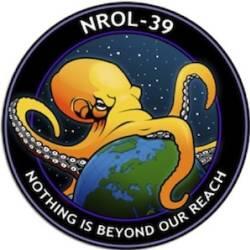
“NROL-39 is represented by the octopus, a versatile, adaptable, and highly intelligent creature. Emblematically, enemies of the United States can be reached no matter where they choose to hide,” says Karen Furgerson, a spokesperson for the National Reconnaissance Office (NRO).

“‘Nothing is beyond our reach’ defines this mission and the value it brings to our nation and the warfighters it supports, who serve valiently all over the globe, protecting our nation.”

in space no one can hear you laugh manically

Read more

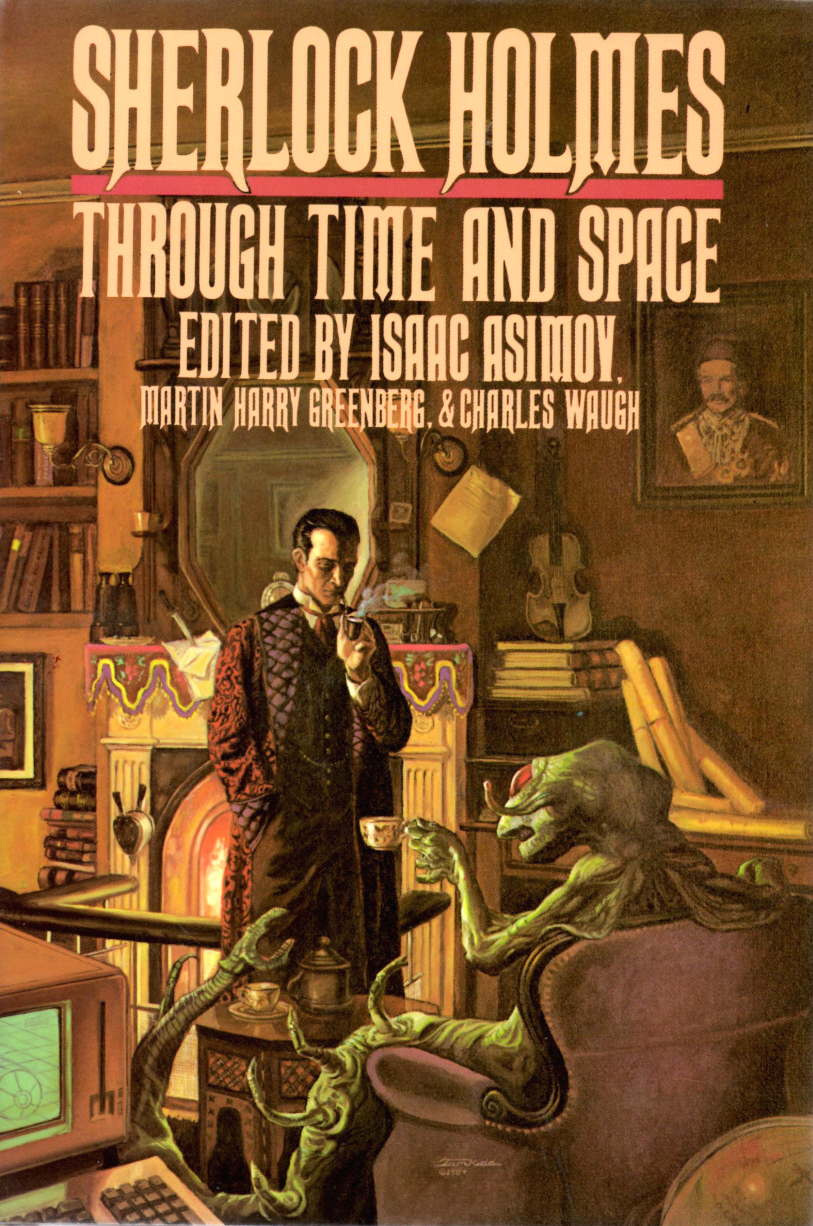
Via Mark’s BoingBoing post,  “I have a feeling Kirby was inspired by the Mayan space jockey image that Erich von Däniken touted as proof of alien visitation in his crackpot science classic, Chariots of the Gods (1968)”

Read more

From Mystery Theater:

As with all things paranormal in the 1970s, there were two paths you could wander down, that of “true-tales” or the one that produced some of the best comics, movies, and music of that era.  Two of my favorite alien-related fictions from that time are The Eternals comic book and the film Alien.

Others have pointed out this before, but I still find the similarities between the first page of The Eternals #1 by Jack Kirby, published in July of 1976

Read more

From BoingBoing comments:

[Ridley] Scott also drew heavily from Mario Bava’s 1965 film “Planet of the Vampires” for his sets and the general plot. The inspiration is more obvious at other points in the film, but here’s one scene similar to the “space jockey.”

Read more

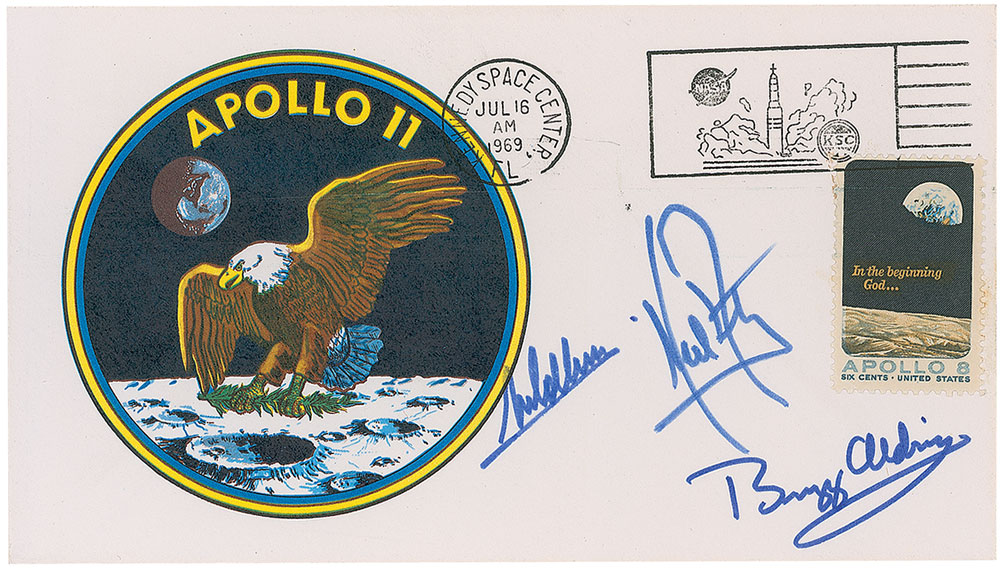
The Apollo crew was paid a per-diem rate of $8—around $50 a day in today’s terms, per day—for the work they did in space. This was the standard away-from-base payment military officers would receive … and it included deductions for things like accommodation (because the astronauts, after all, were being housed in their spaceship).

You could read this as NASA being cheap; you could also read it as NASA seeing its highly publicized moonwalkers as just the most visible extensions of the space program’s enormous network of human capital. Either way, the astronauts earned salaries that were notably modest in relation to the risk they were incurring by taking trips into the unknown. Which was a matter of concern not just to them, but to their families. What if something were to go wrong as they were flying their missions? The astronauts wouldn’t just be leaving grieving families behind; they would also be leaving those families without their primary breadwinners. This was the 60s, after all.

So the astronauts—with the help of NASA—took precautions. Most notably, while in quarantine before launch, they each signed three cards (“insurance cards”) that were then given to their families. The logic being that, should something go wrong during the mission, the cards bearing the valuable signatures of the fallen astronauts could be sold, with proceeds benefitting the flyers’ families.

Read more