wtbw:
Read more

In reality, once helmet, gloves and an oxygen-supplying backpack were added, it was a wearable spacecraft. Cocooned within 21 layers of synthetics, neoprene rubber and metalized polyester films, Armstrong was protected from the airless Moon’s extremes of heat and cold (plus 240 Fahrenheit degrees in sunlight to minus 280 in shadow), deadly solar ultraviolet radiation and even the potential hazard of micrometeorites hurtling through the void at 10 miles per second.
The Apollo suits were blends of cutting-edge technology and Old World craftsmanship. Each suit was hand-built by seamstresses who had to be extraordinarily precise; a stitching error as small as 1/32 inch could mean the difference between a space-worthy suit and a reject. While most of the suit’s materials existed long before the Moon program, one was invented specifically for the job. After a spacecraft fire killed three Apollo astronauts during a ground test in 1967, NASA dictated the suits had to withstand temperatures of over 1,000 degrees Fahrenheit. The solution was a state-of-the-art fabric called Beta cloth, made of Teflon-coated glass microfibers, used for the suit’s outermost layer.
Read more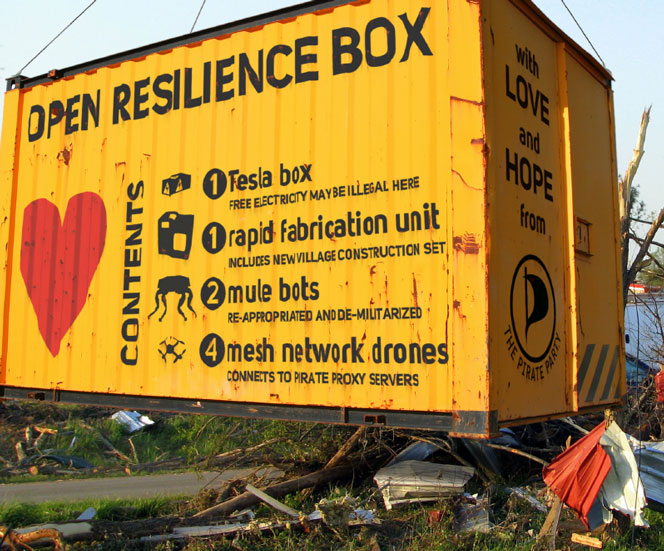
Read morehttp://www.iftf.org/future-now/article-detail/artifact-from-the-future-energy-wants-to-be-free/
“Artifact from the Future: Energy Wants To Be Free
The UN has teamed up with the global Pirate Party, a political party with a platform of open intellectual property (IP), to provide new disaster relief kits that use open-source components to build ad hoc infrastructures for everything from power to water to Internet access. At the core of the relief kit is the now famous Tesla Box—a 10-foot shipping container that can power a neighborhood by harnessing the sub-atomic Casimir Effect. What else will you find in the open-source kit? Wireless lightbulbs, mobile device chargers, rechargeable desalination straws, and an Internet-in-a-suitcase.”
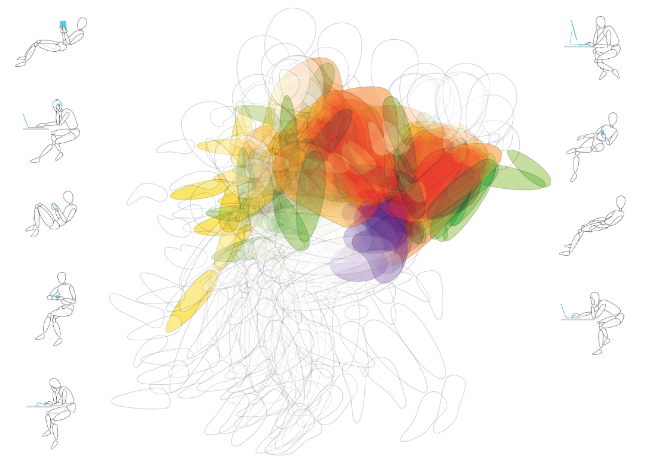
Read moreThe âahaâ moment in Steelcaseâs investigation of workplace postures came when the researchers included smart devices and laptops in the study. The nine postures (left) and key movement zones (far left) they identified influenced the design of the Gesture chair, launched earlier this year. (via Ergonomics in the Digital Age)
The new science of sitting.

Read moreVirgin Galactic ‘not much of a space flight’, says astronaut Chris Hadfield
High-profile Canadian praises concept but says space tourists are ‘just going to go up and fall back down again’
Chris Hadfield, the Canadian astronaut whose tweeted photos, videos and rendition of David Bowie’s Space Oddity brought him global fame during a stint aboard the International Space Station, has questioned what kind of experience future space tourists will have with Virgin Galactic, saying they are “just going to go up and fall back down again”.
The 54-year-old, who spent five months commanding the ISS this year, also said the nature of space travel meant that at some point it appeared inevitable that a Virgin Galactic craft would crash.
Hadfield nonetheless praises the Virgin Galactic concept, under which passengers who have booked seats with a $250,000 deposit will fly to 68 miles above Earth and experience zero gravity. He says the Virgin chief, Richard Branson, has been in touch with him for advice.
Hadfield, whose recording of the Bowie song, with a video shot inside the ISS, has been watched more than 18m times on YouTube, said sign-ups for Virgin Galactic, such as Paris Hilton, might be disappointed if they expect an experience on the lines of the space blockbuster Gravity.
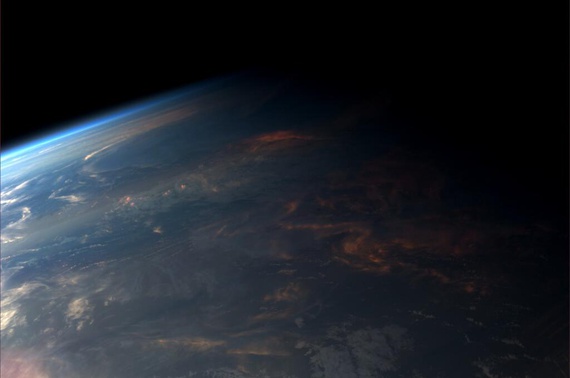
“I’m all for the idea. I commend him for it. But it’s not much of a space flight. I’m not sure she knows what she’s paying for. She may think she’s going to … see the universe and stars whipping by. None of that’s happening. They’re just going to go up and fall back down again. They’ll get a few minutes of weightlessness, and they’ll see the black of the universe. And they’ll see the curve of the Earth and the horizon, because they’ll be above the air. But whether that’ll be enough for the quarter-million-dollar price tag? I don’t know…eventually they’ll crash one. Because it’s hard. They’re discovering how hard. They wanted to fly years ago and faced a lot of obstacles, but he’s a brave entrepreneur and I hope he succeeds. The more people who can see the world this way, the better off we are.”
In his new memoir, An Astronaut’s Guide To Life On Earth, Hadfield argues that space travel carries inherent risks, not least because of the relative lack of testing of any spacecraft. He writes:
“No aeroplane you’ve ever gotten into had less than thousands of flights before they took their first passenger. Because vehicles are unsafe at first. We only flew the [space] shuttle 135 times total. Every flight was a radical test flight. With really high stakes.”
In a Guardian interview, Hadfield also explains the complexities of life aboard the ISS, where the isolation and tiny number of inhabitants means everyone must be multi-talented:
“We are our own town. Every single skill that exists in a town, we have to have on board. There are six of us, then three leave and are replaced by another three. But if they have a problem on the way up, then there’s three of you. So every trio that goes up has to have all the skills necessary for the entire time.”
A spokeswoman for Virgin Galactic described Hadfield as “a good friend and supporter”, and said there was a huge difference between his long space flights and those planned for paying passengers.
She said: “We are expecting to fly Richard and his children next year in the world’s most tested spacecraft and have emphasised since the start that commercial service will only commence once we fully understand and can satisfactorily manage the risks involved. There are no shortcuts.”
Source: guardian
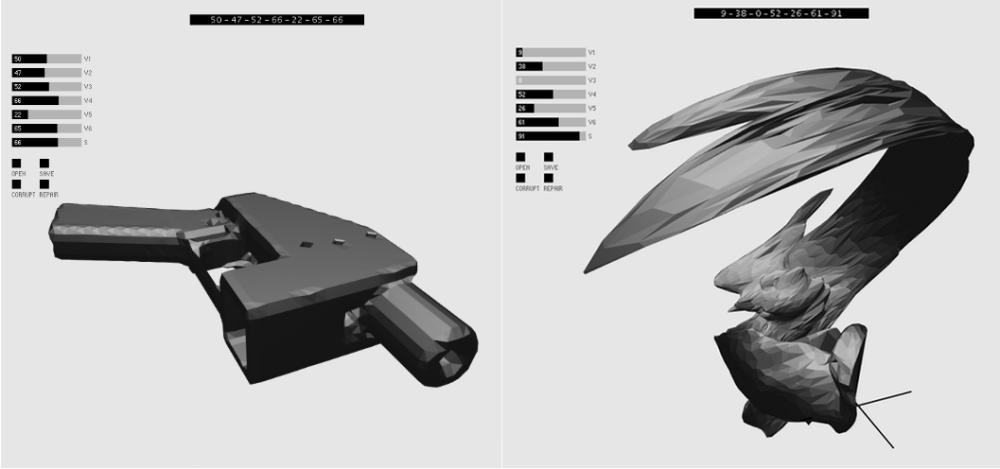
Late last month Matthew Plummer-Fernandez, the 31-year-old creative technologist for Goldsmith College’s Interaction Research Studio at the University of London, released what he’s calling ‘Disarming Corruptor,’ a piece of free software designed to distort 3D-printable blueprints such that only another user with the app and the knowledge of a certain key combination can reverse the distortion and print the object. That means any controversial file–say, a figurine based on Mickey Mouse or another copyrighted or patented shape, or the 3D-printable gun created earlier this year known as the Liberator–could be ‘encrypted’ and made available on a public repository for 3D-printing blueprints like the popular site Thingiverse without tipping off those who would try to remove the file.
Read more

 The Committee to Nuke Elysium