
A nearly perfect ring of hot, blue stars pinwheels about the yellow nucleus of an unusual galaxy known as Hoag’s Object.
Read more
A nearly perfect ring of hot, blue stars pinwheels about the yellow nucleus of an unusual galaxy known as Hoag’s Object.
Read more
Read moreIn Spitzer’s infrared view of the Helix nebula, the eye looks more like that of a green monster’s. Infrared light from the outer gaseous layers is represented in blues and greens. The white dwarf is visible as a tiny white dot in the center of the picture. The red color in the middle of the eye denotes the final layers of gas blown out when the star died.
The brighter red circle in the very center is the glow of a dusty disk circling the white dwarf (the disk itself is too small to be resolved). This dust, discovered by Spitzer’s infrared heat-seeking vision, was most likely kicked up by comets that survived the death of their star. Before the star died, its comets and possibly planets would have orbited the star in an orderly fashion. But when the star blew off its outer layers, the icy bodies and outer planets would have been tossed about and into each other, resulting in an ongoing cosmic dust storm. Any inner planets in the system would have burned up or been swallowed as their dying star expanded.
The Helix nebula is one of only a few dead-star systems in which evidence for comet survivors has been found.

“If our hypothesis for Mount Sharp holds up, it challenges the notion that warm and wet conditions were transient, local, or only underground on Mars,” said Ashwin Vasavada, Curiosity deputy project scientist at NASA’s Jet Propulsion Laboratory in Pasadena, California. “A more radical explanation is that Mars’ ancient, thicker atmosphere raised temperatures above freezing globally, but so far we don’t know how the atmosphere did that.”
Why this layered mountain sits in a crater has been a challenging question for researchers. Mount Sharp stands about 3 miles (5 kilometers) tall, its lower flanks exposing hundreds of rock layers. The rock layers – alternating between lake, river and wind deposits – bear witness to the repeated filling and evaporation of a Martian lake much larger and longer-lasting than any previously examined close-up.
“We are making headway in solving the mystery of Mount Sharp,” said Curiosity Project Scientist John Grotzinger of the California Institute of Technology in Pasadena. “Where there’s now a mountain, there may have once been a series of lakes.”
Curiosity currently is investigating the lowest sedimentary layers of Mount Sharp, a section of rock 500 feet (150 meters) high, dubbed the Murray formation. Rivers carried sand and silt to the lake, depositing the sediments at the mouth of the river to form deltas similar to those found at river mouths on Earth. This cycle occurred over and over again.
“The great thing about a lake that occurs repeatedly, over and over, is that each time it comes back it is another experiment to tell you how the environment works,” Grotzinger said. “As Curiosity climbs higher on Mount Sharp, we will have a series of experiments to show patterns in how the atmosphere and the water and the sediments interact. We may see how the chemistry changed in the lakes over time. This is a hypothesis supported by what we have observed so far, providing a framework for testing in the coming year.”
After the crater filled to a height of at least a few hundred yards, or meters, and the sediments hardened into rock, the accumulated layers of sediment were sculpted over time into a mountainous shape by wind erosion that carved away the material between the crater perimeter and what is now the edge of the mountain.
On the 5-mile (8-kilometer) journey from Curiosity’s 2012 landing site to its current work site at the base of Mount Sharp, the rover uncovered clues about the changing shape of the crater floor during the era of lakes.
Read more
Cyberpunk was originally not a character that we were waiting for, but simply the way the avant garde looked and felt when they started messing around with computers. To try to ethically affect the evolving network of systems in which we find ourselves, is to be political. Not everyone will be a ninja hacker. But if every person who opposed the NSA’s wiretaps spray painted a CCTV camera, that would be something. If every person who thought Facebook is a scum-sucking corporation finally had the nerve to delete their account, that would be something. But we can’t even hack our own desires long enough to cut ourselves off from a social network. Instead, we retweet a link to a story about a DdoS program, put on some boots, load up a soundtrack, and assume that the politics will just happen
FINALLY DELETED MY FACEBOOK ACCOUNT.
FREE AT LAST
thx interdome
Read more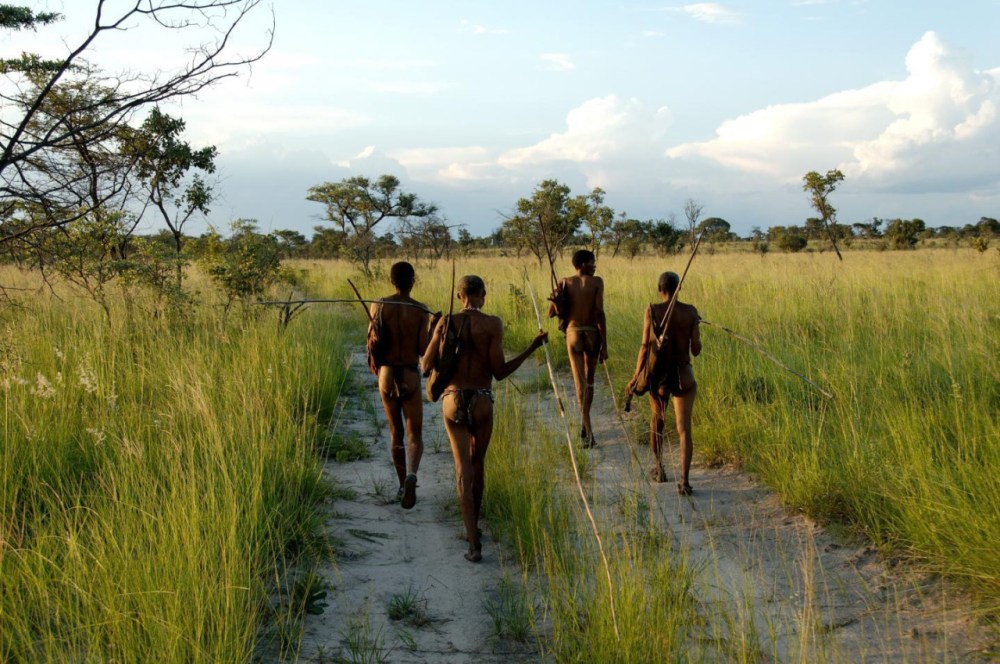
“Khoisan hunter-gatherers in Southern Africa always have perceived themselves as the oldest people” said Stephan Schuster of Nanyang Technological University in Singapore and a leader of the research team.
The group analyzed five study participants from different tribes in Namibia. The study investigated 420,000 genetic variants across 1,462 genomes from 48 ethnic groups in populations worldwide. These analyses reveal that Southern African Khoisans are genetically distinct not only from Europeans and Asians, but also from all other Africans. First author Hie Lim Kim of Nanyang Technological University, said, “It is fascinating to unravel the population history of humankind over the last 150,000 years.”
By conducting extensive computational analyses, the team demonstrated that two of the sequenced individuals showed no signs of having inherited any genetic material from members of other ethnic groups. Interestingly, these individuals are the oldest members of the Ju/‘hoansi tribe, which still live in protected areas of Northwest Namibia.
“This and previous studies show that the Khoisan peoples and the rest of modern humanity shared their most recent common ancestor approximately 150,000 years ago, so it was entirely unexpected to find that this group apparently did not intermarry with non-Khoisan neighbors for many thousand years,” said Webb Miller, professor of Bioinformatics at Penn State and a member of the research team. “The current Khoisan culture and tradition, where marriage occurs either among Khoisan groups or results in female members leaving their tribes after marrying non-Khoisan men, appears to be long-standing.”
The cultural and genetic persistence of the Ju/’hoansi tribe is intriguing, the researchers say, because genetic and genomic analysis of ancient hominid lineages such as the Neanderthals, as well as non-African humans, have shown that intermarrying does occur frequently in these groups and is traceable over the entire time span of 150,000 history during which anatomically modern humans have lived.
“We also observed gene flow for some of the other Khoisan groups, as defined by their largely varying language, but a key finding of this study is that, even today, individuals without genes from other communities can be identified within the Ju/’hoansi population and possibly others,” Schuster said.
“Having identified non-admixed Khoisan individuals, we could compare the effective population size of the Khoisan with that of other humans over more than 100,000 years,” said research-team member Aakrosh Ratan, an assistant professor at the University of Virginia. “In a twist of fate, the major ethnic groups today in Africa, Asia, and Europe increased in size only after overcoming a population decline about 20,000 years ago.”
Read more



 The Committee to Nuke Elysium