Read moreThe density of space junk peaks around 620 miles up, in the middle of so-called low-Earth orbit. That’s bad, because many weather, scientific, and reconnaissance satellites circle in various low-Earth orbits. But that height also offers an opportunity. Below about 560 miles, small objects start to feel a significant drag from the Earth’s upper atmosphere. This drag causes them to slowly spiral toward Earth, and they eventually burn up in the atmosphere. The tungsten cloud could theoretically provide extra drag on objects orbiting above the 600-mile mark, slowing the itty-bitty debris down enough to fall below the 560-mile threshold. Tungsten wouldn’t clear up space instantly—objects at 560 miles can still circle for decades. But that’s vastly better than the centuries-long orbits of fast-moving objects even a little higher.
That said, there could be a downside to sending 20 tons of heavy metal dust aloft. Eventually, the tungsten cloud would itself fall toward Earth. Tungsten isn’t acutely toxic, and Ganguli and friends argue that, spread over many years, all that dust would not amount to much, especially compared with the hundreds of tons of micro-meteors and other space dust that already flits down onto Earth each day. But their five-page paper outlining the tungsten cloud devotes 54 words to the potential environmental impact, hardly an exhaustive look. Astronomers might also object, because the dust could interfere to an unknown degree with light streaming toward Earth from space. Fighting through swarms of microscopic dust could give satellites fits, too, though again, the naval scientists argue the impact would be negligible. (Most satellites point their instruments either straight down toward Earth or straight out into space, and therefore away from what would be mostly horizontal streams of tungsten dust.)
These scenarios all assume, though, that the tungsten dust will behave, and that the ionosphere or solar wind or whatever else won’t interact with it in funny ways. For instance, what if the tungsten doesn’t disperse in nice soft poofs but clumps together? Something similar happened with Project West Ford, a Cold War operation in the early 1960s to improve the reliability of radio communication (in case the Soviets sabotaged our undersea cables) by giving transmitters something solid to bounce signals off in space. To howls worldwide, the U.S. injected 480 million inch-long copper needles into orbit, clusters of which still circle Earth. Or, some observers have suggested that the dust could swell outward—perhaps even form a Saturn-like ring of Element 74 around Earth.
So, yeah, the idea still needs polishing. But if the growing amount of space junk wipes out a few billion-dollar satellites soon, a silvery tungsten cloud could be the least of many evils.
Author: m1k3y


The main purpose of the utilization era will be to support space-based scientific research and develop technologies for human exploration Beyond Earth Orbit (BEO).
Now that the US Segment of the ISS is completed (bar the addition of potential future modules such as a Bigelow inflatable), the ISS has extraordinary capabilities to conduct research in space, the likes of which have never been seen before.
Due to its huge solar arrays and Ku-band antennas, the ISS has power and data capabilities which are capable of supporting multiple payloads, while also providing them with a long-term, stable platform on which to attach.
The benefits of this is that scientific payloads can be attached to the ISS without needing their own power supply, data downlink capability, and attitude control system, thus significantly reducing the cost and time required to fly an experiment in space.
via Tech Demos: NASA preparing for full ISS utilization in post-Shuttle era | NASASpaceFlight.com
Read more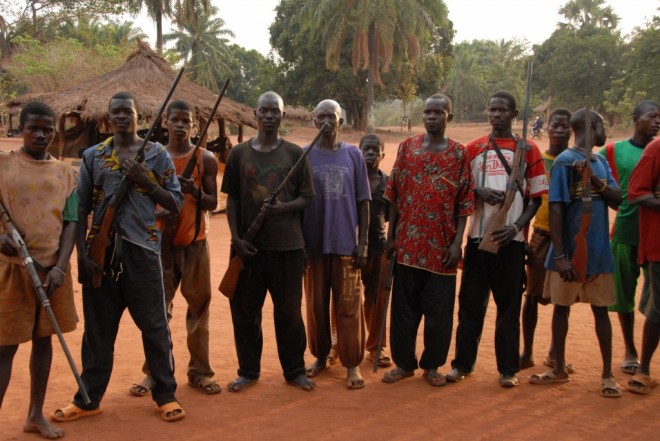
The Obo scouts represent a phenomenon found in many conflict zones. When government or occupying armies fail to provide security, vulnerable communities often organize their own forces. It’s happened in northern Iraq’s besieged Christian communities, across Afghanistan and, most famously, in Sunni-dominated north-central Iraq, where volunteer “Sons of Iraq” groups helped turn the tide against Iraqi insurgents.
The downside of these DIY militias is the risk they pose to the long-term stability of their countries. Baghdad and the U.S. military struggled to stand down and reintegrate Sons of Iraq groups after security improved and they became unnecessary. NATO has canceled several Sons of Iraq-style initiatives in Afghanistan after sedition-minded warlords co-opted some of the militia groups.
The Obo scouts could entail a similar long-term liability to Central African Republic’s weak government. “The very act of civilians taking up arms outside of their government’s direct control is a potentially problematic issue without an easy answer,” Finck admitted.
The scouts could also find themselves at odds with the Pentagon’s efforts in Africa.
Since its establishment in late 2008, U.S. Africa Command, headquartered in Germany, has participated in just one direct attack on the LRA. In December 2008, 17 Africom advisers helped plan, and provided fuel for, a complex assault on LRA strongholds in Congo. The main forces for the attack were 6,000 Ugandan and Congolese troops.
Operation Lightning Thunder was a disaster. A Ugandan jet fighter crashed early in the campaign, killing the pilot. The Ugandan troops leading the ground assault arrived at the main LRA camp days late. The LRA scattered in all directions, killing a thousand Congolese civilians as the Congolese army stood idly by.
In the operation’s bloody wake, Africom determined to take a more passive role in countering the LRA. Instead of directly attacking the rebels, the command sent trainers to help improve the Congolese and Central African armies. Africom is betting on the weak central governments of LRA-infested countries to eventually be able to handle the rebel threat on their own.
But the Obo scouts have all but given up on ever receiving help from their government. “Members of these local defense forces … feel that there is no other alternative [to arming themselves] and have committed to continuing their efforts until their community finds relief from the LRA,” Finck reported.
Thanks in part to Invisible Children and the Dutch group, Obo is better equipped than most communities to defend itself against the LRA, and to strike back using come-home messages. As long as African governments remain weak, and their foreign allies focus on assisting these regimes rather than protecting the civilians on the front lines, the kind of DIY security practiced in Obo could become widespread.
The implications of Obo’s self-defense efforts are huge for vulnerable communities across Africa, for the rebel groups that threaten them, and for the central governments whose legitimacy erodes by the day, as everyday people build their own armies and intelligence apparatuses from scratch.
via African Village Uses Tech to Fight Off a Rape Cult | Danger Room | Wired.com
Read more
The CIA has been ramping up its intelligence gathering efforts in Yemen in recent months in order to support a sustained campaign of drone strikes. The CIA coordinates closely with Saudi intelligence officers, who have an extensive network of on-the-ground informants, officials say.
The new CIA drone program will initially focus on collecting intelligence to share with the military, officials said. As the intelligence base for the program grows, it will expand into a targeted killing program like the current operation in Pakistan.
While the specific contours of the CIA program are still being decided, the current thinking is that when the CIA shifts the program from intelligence collection into a targeted killing program, it will select targets using the same broad criteria it uses in Pakistan. There, the agency selects targets by name or if their profile or “pattern of life"—analyzed through persistent surveillance—fits that of known al Qaeda or affiliated militants.
By using those broad criteria, the U.S. would likely conduct more strikes in Yemen, where the U.S. now only goes after known militants, not those who fit the right profile.
…
Most of the military’s strikes have been conducted with manned aircraft and cruise missiles. But last month, the U.S. military used an armed drone to try to kill Mr. Awlaki, the American-born radical cleric. The missile missed its target.
via CIA Plans Drone Strikes in Yemen – WSJ.com
Read more
Lulz Security posted files online which indicated they had been in the Senate network. However, none of the files appeared to be sensitive. “We don’t like the US government very much,” Lulz Security said at the top of a release. “This is a small, just-for-kicks release of some internal data from Senate.gov – is this an act of war, gentlemen? Problem?” it added. (via BBC News – Lulz attacks: US orders review as Senate site hacked)
Read more

In the case of these biolasers, human kidney cells have been genetically enhanced to produce the proteins that make jellyfish glow.
These glowing cells were stuck between two tiny mirrors barely bigger than the cell itself, and when the cell was energized with blue light through a microscope, it fired out a bright green directional laser beam that was visible to the naked eye, just like a little laser pointer. Under a microscope, it looks like this:
(see above)
Currently, the researchers are working on ways to stick the mirror array inside the cell itself, and there’s still the problem of the energizing light source, but that could be solved by routing optical fibers directly through the body. Yeah, we’re talking about implanted fiber optic cabling. To power your laser cells. Welcome to science.
via Scientists combine humans with jellyfish to create living lasers | DVICE
Read moreRead moreTill now, scientists and multinational corporations promoting GM crops have maintained that Bt toxin poses no danger to human health as the protein breaks down in the human gut. But the presence of this toxin in human blood shows that this does not happen. Scientists from the University of Sherbrooke, Canada, have detected the insecticidal protein, Cry1Ab, circulating in the blood of pregnant as well as non-pregnant women. They have also detected the toxin in fetal blood, implying it could pass on to the next generation. The research paper has been peer-reviewed and accepted for publication in the journal Reproductive Toxicology. They were all consuming typical Canadian diet that included GM foods such as soybeans, corn and potatoes. Blood samples were taken before delivery for pregnant women and at tubal ligation for non-pregnant women. Umbilical cord blood sampling was done after birth. Cry1Ab toxin was detected in 93 per cent and 80 per cent of maternal and fetal blood samples, respectively and in 69 per cent of tested blood samples from non-pregnant women.

 The Committee to Nuke Elysium