
Paleo-Indians hunting a glyptodont
Heinrich Harder (1858–1935), c.1920.
Read moreWhen the only job you can get has a mandatory uniform and apron, a nose-piercing and a tattoo are among the few things that remind you that you are not a slave.
Read moreThe rise of the sharing economy and the brazen pugnacity of Silicon Valley explain both NASDAQ’s current frothiness and the class anxieties the New York Times has finally caught up to. This is a different kind of bubble. There is real money to be made in applying the new technological innovations that have been pouring out of the Valley for lo these many decades. But change — relentless creative destruction — freaks people out.
What makes the current boom different from the last one is that the last time around, the froth was mostly tied to the potential of new technology. This time around, it is a reflection of the reality of new technology. This explains both the wealth being created and the arrogance of those who are deploying new tech. They think they know better because: have you looked at a smartphone lately? It also explains both the sense of loss felt by so many as the old San Francisco melts away like a sand castle before the incoming tide, and the excitement experienced by those who — as San Franciscans have always been wont to do — thrill to embrace the new.
It is entirely possible that 10 or 20 years hence we may look back at the era when pink-moustachioed cars teemed on the streets of San Francisco as the last absurd, ridiculous gasp of the second great tech bubble before it popped. Maybe we’ll even recall this moment as the tipping point before Silicon Valley arrogance and accelerating class stratification precipitated a political reaction. We’ll understand how those convivial fist bumps masked the relentless emasculation of labor, the division of society into freelancers subletting their cars and couches and physical labor for the benefit of a smaller and smaller group of people at the top of the techno-food chain.
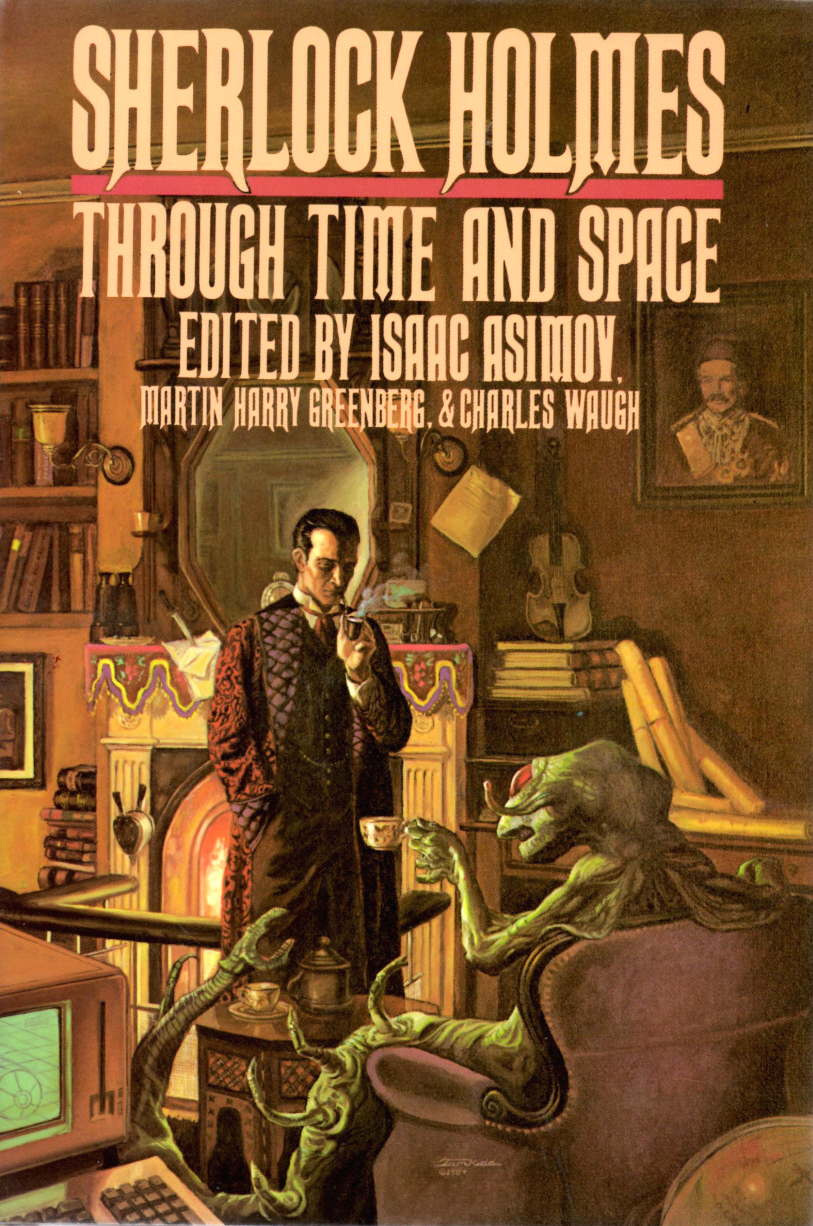
Read moreSherlock Holmes
Through time and space
Edited by Isaac Asimov
Martin Harry Greenberg & Charles Waugh
Read moreI hate to bring this up but, uh, this a commercial ship, not a rescue ship.
Read moreIt’s a rescue mission, you’ll love it.
Read moreBurglary is about getting something that you want that’s guarded by architecture. I realized over the years that while that architects thinks they are the only ones thinking about…built space. But the burglar rethinks the architectural environment in an interesting way, unpuzzling how you get from A to B. If you start pulling on the string of the sweater there and start seeing the burglar as an urban expert, it takes you some pretty interesting places…
You start getting into this almost interdimensional weave of surfaces that are being argued between lawyers and cops. Burglary is turning into this insane mathematical exercise for generations to come. Burglary is now encompassing the movement of human beings through space in a really fascinating way. The idea is that we have to define what burglary might be. Pursuing where these arguments might go, you get into this sphere of breaking and entering, of finding buildings that have outer perimeters, if I go under a roof, am I burglarizing or simply trespassing in your yard? Burglary is this really undefined thing.
…
One of my favorite heist movies is actually Die Hard. I think it’s an amazing movie. And, in fact, every aspect of the movie is a misuse of a skyscraper in a really amazing way. They go down elevator shafts, they go through air ducts instead of hallways. They shoot their way through other construction. And on top of that he jumps off the roof and comes back in through a window. It’s as if you assembled a whole bunch of people who had no idea how to use a building. And turned that into an action film.



Read moreIf we’re going to have parts of the world sectioned off to allow for unfettered technological experimentation, then we’re going to need to seal them off and deny the rest of the world access to that tech for some period of time. Speeding things up in some places means slowing things down everywhere else.
After all, if the purpose of these zones would be to try things out and take risks to figure out their effects on society, then we need to prevent those things from getting out into the wild, in case the effect they have is bad. This suggests a global model of technological adoption that’s more like theAmish system.
Make no mistake, some of the experiments will go bad. If they don’t, then the experiments weren’t really all that experimental.
People will die. Dedication to the idea of communities that are free to go down rabbit holes and dead ends to see if there’s something valuable there means a dedication to allowing some of those groups to wipe themselves out. What do you do when your futurenauts end their period of experimentation maimed and traumatized because of a rampaging biotech project? How do you quarantine a group of people pushing the limits of the nuclear lifestyle?
Worse yet, what if things go well? What do you do when one of your experimentation communities cures AIDS (or seems to have) ahead of schedule. Do you let that tech back out into the world? What’s the procedure for evaluation and release? How long does the next Facebook have to stay isolated and in testing before we allow it access to the first billion users?


