
The Star Trek: Renegades Teaser Trailer has just gone live.
It’s like Star Trek: Why Did Farscape Ever Get Cancelled?
Basically this, yes.
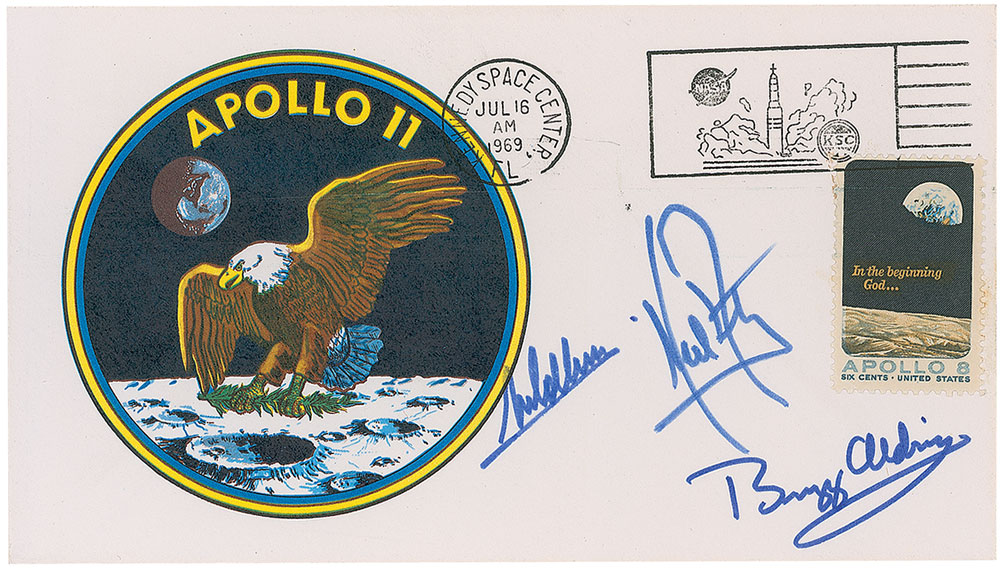
The Apollo crew was paid a per-diem rate of $8—around $50 a day in today’s terms, per day—for the work they did in space. This was the standard away-from-base payment military officers would receive … and it included deductions for things like accommodation (because the astronauts, after all, were being housed in their spaceship).
You could read this as NASA being cheap; you could also read it as NASA seeing its highly publicized moonwalkers as just the most visible extensions of the space program’s enormous network of human capital. Either way, the astronauts earned salaries that were notably modest in relation to the risk they were incurring by taking trips into the unknown. Which was a matter of concern not just to them, but to their families. What if something were to go wrong as they were flying their missions? The astronauts wouldn’t just be leaving grieving families behind; they would also be leaving those families without their primary breadwinners. This was the 60s, after all.
So the astronauts—with the help of NASA—took precautions. Most notably, while in quarantine before launch, they each signed three cards (“insurance cards”) that were then given to their families. The logic being that, should something go wrong during the mission, the cards bearing the valuable signatures of the fallen astronauts could be sold, with proceeds benefitting the flyers’ families.
Read moreRead moreFraser, the Australian high commissioner who came to Kiribati after serving on Nauru, a nearby island nation made desolate, like Banaba, by guano mining, said the main hope for the I-Kiribati on Tarawa is to move to the more lightly populated atolls, or to begin preparing for an orderly escape altogether. He described a potentially insurmountable challenge for Kiribati: On the one hand, it is President Tong’s duty to attract investment and aid. On the other hand, he must also plan for his country’s eventual evacuation. It’s difficult to attract investment to a place that might soon drown. This paradox leaves Kiribati poor and utterly reliant on external aid, mainly from Australia and New Zealand.
Read moreKiribati is a flyspeck of a United Nations member state, a collection of 33 islands necklaced across the central Pacific. Thirty-two of the islands are low-lying atolls; the 33rd, called Banaba, is a raised coral island that long ago was strip-mined for its seabird-guano-derived phosphates. If scientists are correct, the ocean will swallow most of Kiribati before the end of the century, and perhaps much sooner than that. Water expands as it warms, and the oceans have lately received colossal quantities of melted ice.
A recent study found that the oceans are absorbing heat 15 times faster than they have at any point during the past 10,000 years. Before the rising Pacific drowns these atolls, though, it will infiltrate, and irreversibly poison, their already inadequate supply of fresh water. The apocalypse could come even sooner for Kiribati if violent storms, of the sort that recently destroyed parts of the Philippines, strike its islands.
For all of these reasons, the 103,000 citizens of Kiribati may soon become refugees, perhaps the first mass movement of people fleeing the consequences of global warming rather than war or famine.This is why Tong visits Fiji so frequently. He is searching for a place to move his people. The government of Kiribati (pronounced KIR-e-bass, the local variant of Gilbert, which is what these islands were called under British rule) recently bought 6,000 acres of land in Fiji for a reported $9.6 million, to the apparent consternation of Fiji’s military rulers. Fiji has expressed no interest in absorbing the I-Kiribati, as the country’s people are known. A former president of Zambia, in south-central Africa, once offered Kiribati’s people land in his country, but then he died. No one else so far has volunteered to organize a rescue.
Mr. Robb says that in this work he stumbled on an understanding of how astronomy guided the Celts, semi-nomadic tribes who dominated Europe in the Iron Age, from 800 B.C. to A.D. 600, in their migrations from the Iberian Peninsula to the Black Sea.
The argument is complex — think of it as Asterix meets “Longitude” — but Mr. Robb basically asserts that the Celts followed the directions of their druids, a caste of scholar-priests who believed in following the path of the sun at the solstice to guide their vast tribal migrations. These migrations unfolded before 58 B.C., when Julius Caesar crossed the Alps and defeated the Gauls, a Celtic tribe, effectively ending Celtic civilization.
In their wanderings, Mr. Robb writes, the Celts laid the groundwork for centuries of European history to follow. They built roads and bridges — making it easier for Caesar to take Gaul, Mr. Robb notes — developed complex communications systems, imposed rule of law, traded with the Greeks, carried out a census and even held an annual pan-tribal congress of druids in southern France.
http://mobile.nytimes.com/2013/11/19/books/graham-robbs-theory-on-celtic-migrations.html
(via tribeofthestrange)
A new report released by the U.S.-based National Academy of Sciences (NAS) highlighting the results of an April 2012 airborne laser survey – the first of its kind in Asia, covering 370 square kilometers of northwest Cambodia’s Khmer Empire archaeological sites – has revealed a much grander Angkor landscape, one without parallel in the pre-industrial world.
Even more sensational, the June announcement of the findings confirmed the existence of a huge medieval city buried beneath impenetrable jungle on a remote mountain.
Read more "Cambodia temple discovery"Ancient West African Megacities
Recent Archeological findings have discovered ancient west African Mega cities dating back to 500 BC possibly rivaling other early urban civilizations such as Mesopotamia. Long before the coming of Islam and the days of the Songhay, Mali and Ghana Empires.
The Archeologists state they have not seen any signs of war & waring, therefore it seems like they lived in relative peace. Some of the cities were twice the size of Timbuktu (Medieval Timbuktu was twice the size of London).
What is most interesting about this information that it emphasizes how little we know of ancient Africa’s past.
Why does this have so few notes.
cause it’s not egypt…. das all folks curr about!

Read more“Fight Club”, dir. David Fincher, 2002
Wake me up before you go-go
Don’t leave me hanging on like a yo-yo
Wake me up before you go-go
I don’t want to miss it when you hit that high
Wake me up before you go-go
‘Cause I’m not plannin’ on going solo
Wake me up before you go-go
Take me dancing tonight
I wanna hit that high (yeah, yeah)“Wake Me Up Before You Go-Go”, created by Wham!, 1984


