Virgin Galactic ‘not much of a space flight’, says astronaut Chris Hadfield
High-profile Canadian praises concept but says space tourists are ‘just going to go up and fall back down again’
Chris Hadfield, the Canadian astronaut whose tweeted photos, videos and rendition of David Bowie’s Space Oddity brought him global fame during a stint aboard the International Space Station, has questioned what kind of experience future space tourists will have with Virgin Galactic, saying they are “just going to go up and fall back down again”.
The 54-year-old, who spent five months commanding the ISS this year, also said the nature of space travel meant that at some point it appeared inevitable that a Virgin Galactic craft would crash.
Hadfield nonetheless praises the Virgin Galactic concept, under which passengers who have booked seats with a $250,000 deposit will fly to 68 miles above Earth and experience zero gravity. He says the Virgin chief, Richard Branson, has been in touch with him for advice.
Hadfield, whose recording of the Bowie song, with a video shot inside the ISS, has been watched more than 18m times on YouTube, said sign-ups for Virgin Galactic, such as Paris Hilton, might be disappointed if they expect an experience on the lines of the space blockbuster Gravity.
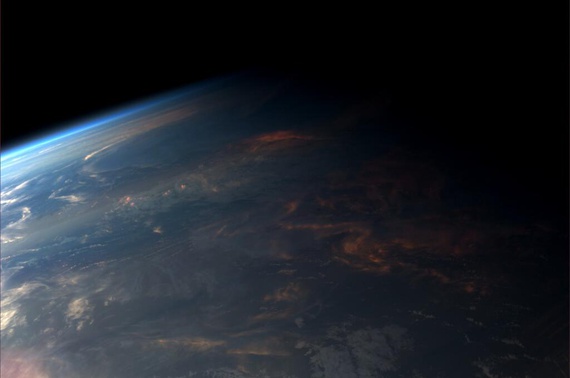
“I’m all for the idea. I commend him for it. But it’s not much of a space flight. I’m not sure she knows what she’s paying for. She may think she’s going to … see the universe and stars whipping by. None of that’s happening. They’re just going to go up and fall back down again. They’ll get a few minutes of weightlessness, and they’ll see the black of the universe. And they’ll see the curve of the Earth and the horizon, because they’ll be above the air. But whether that’ll be enough for the quarter-million-dollar price tag? I don’t know…eventually they’ll crash one. Because it’s hard. They’re discovering how hard. They wanted to fly years ago and faced a lot of obstacles, but he’s a brave entrepreneur and I hope he succeeds. The more people who can see the world this way, the better off we are.”
In his new memoir, An Astronaut’s Guide To Life On Earth, Hadfield argues that space travel carries inherent risks, not least because of the relative lack of testing of any spacecraft. He writes:
“No aeroplane you’ve ever gotten into had less than thousands of flights before they took their first passenger. Because vehicles are unsafe at first. We only flew the [space] shuttle 135 times total. Every flight was a radical test flight. With really high stakes.”
In a Guardian interview, Hadfield also explains the complexities of life aboard the ISS, where the isolation and tiny number of inhabitants means everyone must be multi-talented:
“We are our own town. Every single skill that exists in a town, we have to have on board. There are six of us, then three leave and are replaced by another three. But if they have a problem on the way up, then there’s three of you. So every trio that goes up has to have all the skills necessary for the entire time.”
A spokeswoman for Virgin Galactic described Hadfield as “a good friend and supporter”, and said there was a huge difference between his long space flights and those planned for paying passengers.
She said: “We are expecting to fly Richard and his children next year in the world’s most tested spacecraft and have emphasised since the start that commercial service will only commence once we fully understand and can satisfactorily manage the risks involved. There are no shortcuts.”
Source: guardian