zzkt:
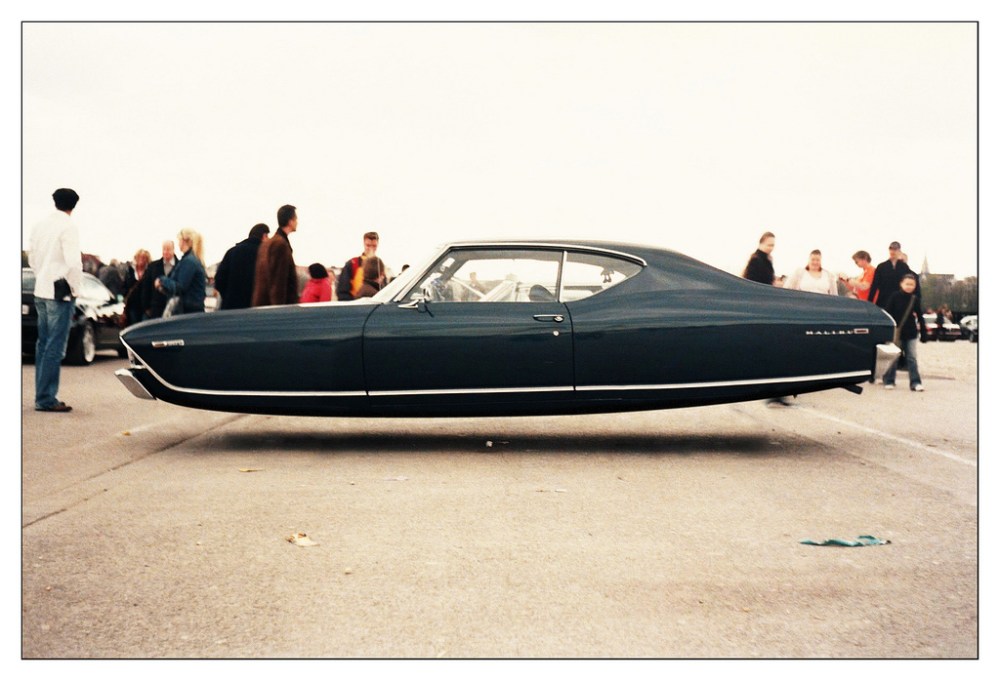
Read moreFlying Malibu by hannes.trapp (via http://flic.kr/p/7Yf6id )
Roll Your Own Culture, a chat with Gordon White of runesoup.com A free wheeling chat with gordonwhite of Runesoup.com on building your own reality map. Drawing upon chaos magic, gnosticism, and the strength of fictional works. Looking at topics such as the billionaire world view, the Secret Space Program, Nazi Science and the Nazi International. […]
Read more


Read moreIn The Not So Distant Future, Glow-In-The-Dark Trees Could Replace Street Lights
Is that… is that even healthy?
There are sea organisms and fungi which glow in the dark and there’s fireflies and jellyfish which glow in the dark. It doesn’t do them any harm nor does it do the people around them any harm. I would say its pretty healthy, as well as it would mean more photosynthesis happening in cities which mean cleaner air.
I was just curious about how they were doing it and for some reason I didn’t think to click the link. But thanks! It makes more sense now. I was afraid it was some kind of chemical thing.
nah just genetic modification using existing bioluminescent genes. Genetics is really cool, and so is bioluminescence. I mean they’ve already made pigs glow using jellyfish genes and pigs are waaay more complicated than trees iirc. So they’re actually (i think) less likely to muck it up with trees.
In which case
GLOWY
FORESTS
GLOWY
TREES
GLOWY
EVERYTHING
(I like glowy things)
means more trees which is good
uses less electricity which is good (for both tax reasons and also just because reasons)
pretties everything up
just generally all good stuff
glowy trees 2k15 plz
*puts on science hat* This is basically an art project. Before anything like this could go live, there would have to be massive serious assessment of the ecological impact, and substantial harm reduction measures implemented. For instance, light pollution affects the behaviours of organisms in urban environments; obvious examples being diurnal birds singing well into the night, deciduous trees retaining leaves into winter, and so forth. Glowing trees can’t be switched off if needed, so the possible consequences of that must be measured. The effects of light pollution are thus far fairly mild but they are real. The thing about streetlamps is that they can’t reproduce and invade wild habitats. Glowing trees could potentially throw seeds into unlit areas such as forests, introducing light pollution where it hasn’t previously existed and affecting the ecosystems dramatically. GMO crops have already caused what could be termed genetic pollution; Glowing trees could cross-fertilise with unaltered rootstock and cause unexpected mutations, which may or may not negatively impact the survivability of the rootstock species, and in turn the other species that depend on the rootstock. Are glowing trees less or more appetising to insects and animals, would there be additional requirements of pesticides or further engineering, would glowing trees affect the reproductive behaviours of insect and animal species, and how would all this interact with the local and global ecosystems? Is there a more containable (thus safer) option, such as tanks/globes of functionally inert biolumiscent algae with a biological “deadman switch” that would prevent it from surviving unassisted if accidentally released? Genetic engineering is unfortunately a can of worms, and though it may provide solutions to many ecological threats, it may also create even more.
*takes off science hat* SO COOL WANT GIMME NOW
The discovery of electric bacteria shows that some very basic forms of life can do away with sugary middlemen and handle the energy in its purest form – electrons, harvested from the surface of minerals. “It is truly foreign, you know,” says Nealson. “In a sense, alien.”
Nealson’s team is one of a handful that is now growing these bacteria directly on electrodes, keeping them alive with electricity and nothing else – neither sugars nor any other kind of nutrient. The highly dangerous equivalent in humans, he says, would be for us to power up by shoving our fingers in a DC electrical socket.
To grow these bacteria, the team collects sediment from the seabed, brings it back to the lab, and inserts electrodes into it.
First they measure the natural voltage across the sediment, before applying a slightly different one. A slightly higher voltage offers an excess of electrons; a slightly lower voltage means the electrode will readily accept electrons from anything willing to pass them off. Bugs in the sediments can either “eat” electrons from the higher voltage, or “breathe” electrons on to the lower-voltage electrode, generating a current. That current is picked up by the researchers as a signal of the type of life they have captured.
“Basically, the idea is to take sediment, stick electrodes inside and then ask ‘OK, who likes this?’,” says Nealson.
At the Goldschmidt geoscience conference in Sacramento, California, last month, Shiue-lin Li of Nealson’s lab presented results of experiments growing electricity breathers in sediment collected from Santa Catalina harbour in California. Yamini Jangir, also from the University of Southern California, presented separate experiments which grew electricity breathers collected from a well in Death Valley in the Mojave Desert in California.
Over at the University of Minnesota in St Paul, Daniel Bond and his colleagues have published experiments showing that they could grow a type of bacteria that harvested electrons from an iron electrode (mBio, doi.org/tqg). That research, says Jangir’s supervisor Moh El-Naggar, may be the most convincing example we have so far of electricity eaters grown on a supply of electrons with no added food.
But Nealson says there is much more to come. His PhD student Annette Rowe has identified up to eight different kinds of bacteria that consume electricity. Those results are being submitted for publication.
Nealson is particularly excited that Rowe has found so many types of electric bacteria, all very different to one another, and none of them anything like Shewanella or Geobacter. “This is huge. What it means is that there’s a whole part of the microbial world that we don’t know about.”
Discovering this hidden biosphere is precisely why Jangir and El-Naggar want to cultivate electric bacteria. “We’re using electrodes to mimic their interactions,” says El-Naggar. “Culturing the ‘unculturables’, if you will.” The researchers plan to install a battery inside a gold mine in South Dakota to see what they can find living down there.
NASA is also interested in things that live deep underground because such organisms often survive on very little energy and they may suggest modes of life in other parts of the solar system.
Meet the electric life forms that live on pure energy
Read more "Meet the electric life forms that live on pure energy"By 2100 A.D. as Kaku predicts we will approach a Type 1. We will capture all the solar energy that reaches Earth increasing our energy supply by a factor of 100-billion. We will have harnessed nanotechnology and warp drive propulsion and will be a civilization of this world and off this world.
By 2200 A.D., a mere century later we will approach Type 2, harnessing all the energy of our Sun, another 100-billion-fold increase. We will be extra-solar inhabiting planets on many nearby stars.
By 3000 A.D. we will have harnessed the energy of every star in the Milky Way, another 100-billion-fold energy increase. As a Type 3 we will traverse the galaxy and will, along the way, meet many other technologically advanced civilizations.
A Type 4 civilization will harness dark and extra-galactic energy. Such a civilization would be unrecognizable to us as such because it would be indistinguishable from the Universe itself. Would we evolve into pure energy? Would a Type 4 civilization be immortal and omnipotent.
…to attain Type 4 we will reach much further into the future, to 12000 A.D. At that point we will have transcended the physical reality of our Universe and may even have poked through to parallel universes in the multiverse.
Sounds delusional? Remember where human civilization’s technological achievements were in 1000 A.D. What would a person living in that time think of the world in which we live today? Magical? Incomprehensible? One thing we know for sure, technological breakthroughs that at one time took a century to achieve, now can happen in a year. It remains true that some technologies are harder to crack, like developing fusion energy. But today we are much closer to achieving that fusion breakthrough that alone will move us faster to becoming a Type 1 civilization. And after that will the rest unfold?
Will Humans Achieve a Type 1 Civilization by 2100? | h+ Magazine
Read more "Will Humans Achieve a Type 1 Civilization by 2100? | h+ Magazine "There is a lot to say about quantum mechanics, perhaps the most mysterious idea ever to be contemplated by human beings, but all we need is one simple ( but hard to accept ) fact: How the world appears when we look at it is very different from how it really is.
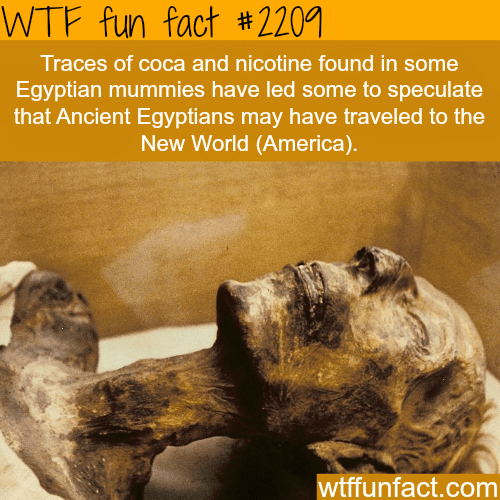
Traces of coca and nicotine found in Egyptian mummies – WTF fun facts
well DUH. a lot of historians are still trying to process the fact that ancient egyptians knew how to build boats, which is ridiculous. why would they not be seafarers and explorers?
this is not new or surprising information at all. it pretty much day one of any african-american studies course.
the egyptians knew that if they put their boats in front of the summer storm winds it’d blow them right across the sea to the Americas and they shared that with the greeks.
It’s really hard for people to understand that everyone had boats, exploration, and trade interactions without the same level of murder, colonization, and violence that the Europeans did. It’s really hard for people to get that.
An 11,000 year old Iroqious boat.
A whole book about Ancient Egyptian Maritime technology and culture.
Scientists “shocked” to discover that humanity casually traveled the seas over 100,000 years ago.
The Sea-Craft of Prehistory (book; Eurocentric as heck)
Humans traveling long distances by sea and deep=sea fishing for c. 42,000 years
The Dufuna Canoe, Africa’s oldest surviving boat, is 8,000 years old (Nigeria)
A fleet of 5,000-year-old boats in Abydos, Egypt
7,000-year-old seaworthy vessels in Kuwait
7,500-year-old boat found in China’s Zhejiang Province.
Scientific Evidence for Pre-Columbian Transoceanic Voyages (273 pages-for the hardcore only!):
The only plausible explanation for these findings is that a considerable number of transoceanic voyages in both directions across both major oceans were completed between the 7th millennium BC and the European age of discovery. Our growing knowledge of early maritime technology and its accomplishments gives us confidence that vessels and nautical skills capable of these long-distance travels were developed by the times indicated. These voyages put a new complexion on the extensive Old World/New World cultural parallels that have long been controversial.I frequently feel that Tumblr is taking up the slack left by my schooling.
This is disproved by genetics. All indigenous Americans are genetically related to the Clovis people, which in turn are directly related to people from Beringia. No humans in any numbers worth speaking of came to the Americas via the Atlantic, and they all came there via the Bering land bridge in the late Paleolithic. Humans might have been capable of sailing across the Atlantic, but the one thing you can always count on migrating humans to do is interbreed. And they didn’t.
I don’t want to speculate too much on why. But just because someone has sea-worthy technology doesn’t mean they are going to go all Ferdinand Magellan. Consider the Chinese—during the 16th-17th centuries, they had better ocean-going technology than the Europeans. And yet, it was the Europeans who predominantly sailed to China, and not the other way around. It simply wasn’t worth it to the Chinese, so they didn’t do it. History isn’t just about having technology, it’s about deploying it. History is full of stories of someone having the right tools, but not doing the right job.
Say you are an iron age fisherman. You make your livelihood by risking your life against storms to land some big tuna from miles out, so you can feed your family and community for the 20-some years of life you’ve got. Why would you suddenly, without any idea of what is out there, decide to just sail west until you found something? To satisfy the exploration counter-narratives of Tumblr users in the 21st century? This is not to say it’s impossible, or even implausible. I liked Valhalla Rising as much as the next person. But… genetics. It just didn’t happen.
Cut to the 39th century. Hyper-Tumblxxxqox post:
“We’ve found ancient texts describing colonies on Mars. We haven’t found any human remains, but there are plenty of technological artifacts there, including plastics only used in the 20th century. We know that rocket technology had been improving since the 14th century when it was pioneers in China, and the Chinese had a fully-space going culture by the 23th century. Therefore, the only plausible conclusion is that China colonized Mars—probably starting around the 1970s.”
In the 39th century they still use bold to show when they are super-serious in a post.
This is one of those areas where the European conceptualization of the behaviour and culture of a lot of early indigenous people seems to be at odds with a mounting stack of physical evidence.
The weak point isn’t the materially supported travel over vast distances. And the weak point isn’t the genetic evidence. The weak point is the conceptualization of native peoples that can’t support societies complex enough to have enforced interbreeding taboos or even non-European approaches to birth control. There are all sorts of political and cultural scenarios that would cut down on interbreeding based on limited travel.
The point being, I think that we’re making a grave mistake when we decide to start pushing inconvenient material evidence out of the way to support the European narrative of history. I’m not saying that it’s all obviously 100% real, I’m just saying I find it problematic when evidence is discounted because it goes against a narrative with extremely shaky foundations.
I see what you’re saying. And certainly, no one knows for sure. However, I think the evidence that is being deemed “inconvenient” in this instance is the genetic evidence.
First, the reason that Clovis culture DNA leading 100% back to Asia is such a big deal, is because this refutes earlier theories that Clovis culture is part of a “first colonization” of the Americas. How else, these theories argue, could Clovis culture have spread so rapidly across the Americas? Why is it that Clovis culture closely resembles other tools found in Europe? Clearly, those discredited theories argue, Clovis culture must have come across the Atlantic some 15,000 years ago.
Well, turns out it didn’t. Genetics, in this case, proved where the people came from conclusively, while theories based on a supposed preponderance of archaeological evidence did not.
Second: is it possible that there was trans-atlantic trade that brought coca and tobacco back from the Americas to Africa/Europe, while somehow preventing any humans interbreeding/migrating, while preventing any animals or crops interbreeding/migrating? Sure, any theory of history for which there is no direct contradictory evidence is possible. But if you want to talk about what is “inconvenient” evidence, I would say that the genetics is much more “inconvenient” to that theory, than a report of trace chemical evidence.
What does a single, potential hand-off of coca really mean, anyway? This single instance of chemical trace evidence is being blown up beyond any reasonable weight. There were no language transfers, no other artifact transfers, no genetic exchanges. Even if a ship sailed from Egypt to the Americas and back, what does this really mean to human history compared to all the other giant, continuous, and drifting migratory patterns that we do have evidence for? This theory of the coca trading ship seems to be a pet narrative, more than it seems relevant to history. Did Egyptians have ships capable of reaching America? Sure. That isn’t in dispute. But this possibility didn’t seem to affect either culture in any way that we have evidence to prove. If we come across some evidence that one culture affected the other in a way other than leaving a few trace chemicals, then we’ll discuss that then. But in the meantime, like with the disproved Clovis theories, this seems like a poorly supported way of inserting a highly suspect footnote into the record. You want to leave open the possibility, fine. Let’s discuss the seaworthiness of ancient ships. But to talk about a theory of contact like it is proven, when in fact all our archaeological evidence except for a single chemical trace proves otherwise, does a disservice to all that we do know and the means by which we know it. But hey, remember that Evolution* is only a theory!
Third: humans are a highly migratory species. And when they do migrate, they leave genetic traces. This is not a “european” thing. This is a human thing. I’m not making any assumptions about non-european religions, economics, language, or kinship structure. I am saying that as humans, they migrate and produce offspring like humans. Pretty much every standing theory of human migration is backed up by evidence of haplogroup transfers. In fact, this is precisely the sort of evidence that makes race a myth—because there is no genetic or physiological basis for race, and if we look at the genetic history of migration we see that pretty much every supposed racial division based on geography was crossed many times over by genetics. This sort of evidence describes how many times “Europe” was invaded by non-europeans and seeded with non-european genetics, rendering anything specifically “european” to European’s genetics only a fraction of their genotype. It describes how Americans came from Asia, and how they spread throughout the American continents and islands not just once but many times, circling around and re-seeding and remixing, just in the way that humans do.
For an idea of just how complex all of this is, check out this article. Scientists still have many different theories of who-moved-where-when, but the one thing human beings didn’t do in the Neolithic/Bronze Age was stay in one place and not interbreed.
Also, see Cahokia. It was the biggest city in North America throughout all of history, until Philadelphia finally surpassed it in the late 19th century. As many as 40,000 people lived there around the year 1200, and the city was pretty much a place specifically founded for continental trade, religious work, and, you guessed it, intermarriage. This is what we have evidence for. This is what culture in the Americas was up to.
One more thing. I think that assuming that complex societies absolutely and without exception do not interbreed (because we’re not just talking cultural taboos here, like “first cousins on the mother’s side are preferred matches”, “or siblings are off limits”, we’re talking actually no genetic traces whatsoever), is a much more dangerous assumption than the opposite. Taboos get broken. Incest happens. But to think that there would be contact without any broken taboos could happen in “complex society” assumes that the underpinning notions of culturally-enforced racial purity are a functional, successful, and natural feature of evolved culture. It also assumes that humans of a “higher culture” (whatever that is) are somehow different than the rest of nature, because they are not bound by the same desire to travel throughout their habitat and breed. It assumes that rather than seek to extend their gene pool as much as possible, human beings are creatures who, once attaining “high culture,” basically comply with the theory of eugenics by privileging selectivity over availability. Perhaps humans of upper classes have the ability to pick the mate they like best overall. But the vast majority of the population ends up mating with whomever they like most from who is available. Animals and humans would rather mate at all (availability) than have unbreachable standards (selectivity), especially based upon such specious concepts as “outgroup”.
To be honest, I find your comment about “non-European methods of birth control” a little confusing. Because you are not simply assuming that they were capable of choosing not to have a child. You are assuming that when they would choose to have a child (which they have absolute control over), they would never, not once ever, choose to have a child with an outsider. So we explain the lack of genetic evidence for this theory by claiming early Americans were the most efficiently selectively breeding society in the history of the world?
In cultures who claim to enforce racial purity, when their genetics are analyzed, they are not nearly as good at enforcing it as they think they are. Eugenics is so ridiculous because even if it was not ethically disgusting, it would be impossible to enforce without universal sterilization. It is a theory completely opposed to the way humans actually behave. Race and nationality is a cultural definition, and therefore a self-fulfilling prophecy. But genetics tells the actual story. To suggest that a population interbreeds with a migrating population of the same species is not Eurocentrism. It is to suggest that humans act resolutely like humans, like the biological creatures that they are.
It’s funny, Cahokia was one of the main things driving my response. After all, in my lifetime we’ve gone from a very simple vision of the mound-builder culture where the notion of a mound-builder city was, to quote one of my earliest mentors back at the Cincinnati Natural History Museum “up there with aliens in the pyramids” to where the notion of a massive mound-builder city with trade up and down the Mississippi is the norm.
And let’s be clear, I do question the narrative the post tries to frame as well and I think it probably does massively overestimate any inter-culture contact. But to discount the whole theory due to the lack of a major haplogroup transfer amongst US Natives seems to ignore vast amount of physical evidence as well as in many cases the self-reporting of these cultures. I mean it obviously casts extreme doubt on any sort of migration.
Also, I pointedly didn’t use any “higher culture” terminology because of exactly how poisonous that notion can get but what really confuses me is the desire to say “so what” and write limited oceanic travel off as a footnote. History is built of footnotes, it’s the application of cultural power and hindsight that defines what is footnote and what is “history”. I’m not arguing that these contact points weren’t extreme outliers — I suspect I’d be in conflict with the original poster as to the extent of any possible pre-European contact — I’m arguing that outliers or not, our histories, especially our histories of pre-European contact need to have room for these things to be explored within the context of the evidence. There needs to be room these narratives to be challenged — especially in those cultures that have their own pre-European first contact stories — which it felt you were dismissing out of hand. No, there were no migrations and no vast trade-routes, likely just occasional outliers.
But outliers matter. Anyone who tells you different is usually trying to sell you a dominant paradigm.
[Edited to add: Just like anyone who hands you a collection of only outliers and calls it a “history” is also, likewise trying to sell something.]
/jumps into tumblr exchange on the Lie of History…
Let me open by quoting paleo-tumblr user ab3l1nc0ln01809:
"But still there is more. It calls up the indefinite past. When Columbus first sought this continent—when Christ suffered on the cross—when Moses led Israel through the Red-Sea—nay, even, when Adam first came from the hand of his Maker—then as now, Niagara was roaring here. The eyes of that species of extinct giants, whose bones fill the mounds of America, have gazed on Niagara, as ours do now. Contemporary with the whole race of men, and older than the first man, Niagara is strong, and fresh to-day as ten thousand years ago.”
posted Sept 30th 01848, The Collected Works of Abraham Lincoln
And drop one link proper before proceeding to unfettered rantage.
“Using short DNA sequences from the plants’ cell nuclei and chloroplasts, Roullier and her co-authors found that the vegetables not only carry the genetic heritage of their South American origin, but exist in different types in Polynesia and the western Pacific. The sweet potatoes in Polynesia were part of a distinct lineage that was already present in the area when European voyagers introduced different lines elsewhere. Each lineage may even have been introduced several times, further complicating the pattern of dispersal and exchange. “The present sample of herbarium accessions does not allow us to rule out multiple prehistoric introductions,” Roullier says. “
History is a damn mess.
The Cosmic Anthropological Method involves collecting what gordonwhite of RuneSoup fame basically calls jigsaw puzzle pieces from a thousand different puzzles. Those facts that break people’s known models of reality. The outliers. Contemplating the things that make other people go ‘huh…’, before resuming their everyday life. Meditating upon these facts, just letting them float around inside your mind, drifting together, almost interlocking, can give the most pleasurable sensawunda.
This is how one can assemble a metaphorical rocket ship capable of escaping the local gravity of one’s foundational civilisational mythology.
The trick is in entertaining a thousand different perspectives without falling subject to the narrative fallacy.
Like: maybe instead Egypt was trading with a contemporary Polynesian culture that had its tentacles across the breadth of the Pacific, and was far more complex than is currently credited even by the Kon Tiki contingent. Or maybe it was those oft overlooked Phoneticians. Or the “Sea People”.
And who were the Olmecs anyway?
And what’s up with those old sea maps that show a pre-IceAge Antarctic coastline?
There is DNA evidence that there was a colony of (South Asian) Indians for its still barely glimpsed Vedic culture that interbred with the indigenous population of Australia. Who’d arrived some eighty thousand years ago via some rather rapid coast hugging, sea jumping migration out of Africa. And were living alongside giant freaking Land Crocodiles for a thousand plus plus years on its eastern coast… but what’s a dragon???
(And also, there’s an equally strong hypothesis to rival the OutOfAfrica orthodoxy that modern humans emerged from the Great Southern Land.)
But how about those cities high in the South American mountains were we can barely breath, seamlessly built from properly massive rocks?
And those deserts with green glass in them that look exactly like what we’ve found after exploding atomic bombs. Except we didn’t, there. (But check out this ace map of where we have.)
But we are literally finding the footprints of ancestors in beaches and bogs in places we never knew they’d been, revealed just for a moment in history by the acts of a climate in chaos. Some of them the only trace of failed branches of the hominid tree. Which grows all the gnarlier the closer we look. We’re up to, what three or four, depending how you count it, different contemporaneous sub-species now. Make those Hobbit cousins of ours literal, and prehistory looks damn right Tolkienesque.
Which brings us back to Abe’s firm belief in, and casual mention of, Giants…
Don’t be a prisoner of certainty. Embrace the wonder. Stare into the Abyss. Be a scientist.
Read more
















 The Committee to Nuke Elysium