Images

Humans did see these animals before they became extinct. Island hopping from Asia, humans crossed into Australia sometime around 50,000 years ago. These two bipeadal mammals overlapped for around 20,000 years before the giants vanished. There are still stories amongst the Australian aborigines with descriptions of what could only be the Giant Short-Faced Kangaroo.
Although they overlapped, there is little evidence of human butchery on fossil remains. Australia was a continent where the climate was changing constantly. Forests shrank as the climate became drier, and some areas experienced extreme droughts. Local extinctions may have taken place, leaving small refugia clinging on which never managed to regain the numbers they once had. To witness a mob of flat-faced, big bottomed kangaroos walking across the landscape surely must have been one of the most wonderful sights our species has ever witnessed.
Read more
there’s your future right there, an angry libertarian with a shotgun and a dead drone.
prompted by interdome
Read morePolitics in 2015 https://t.co/20UDC5WFBo @WriteArthur pic.twitter.com/UTapN5zuc9
— Ghost Ship Rothstein (@Interdome) January 29, 2015
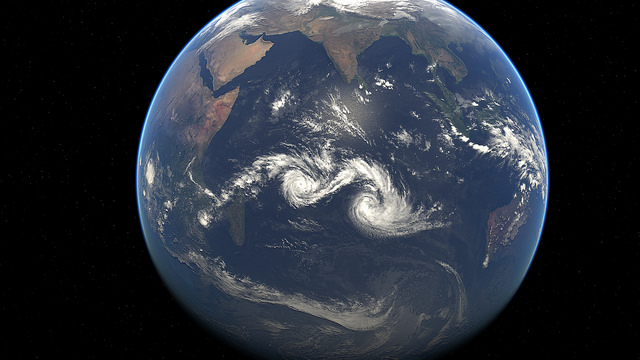
Tropical Cyclones Diamondra and Eunice by EUMETSAT on Flickr.
“Tropical Cyclones Diamondra and Eunice”
– like watching two galaxies collide
weather, dynamic systems, the mysteries of form repeating across scales of time and space.
good morning
Read more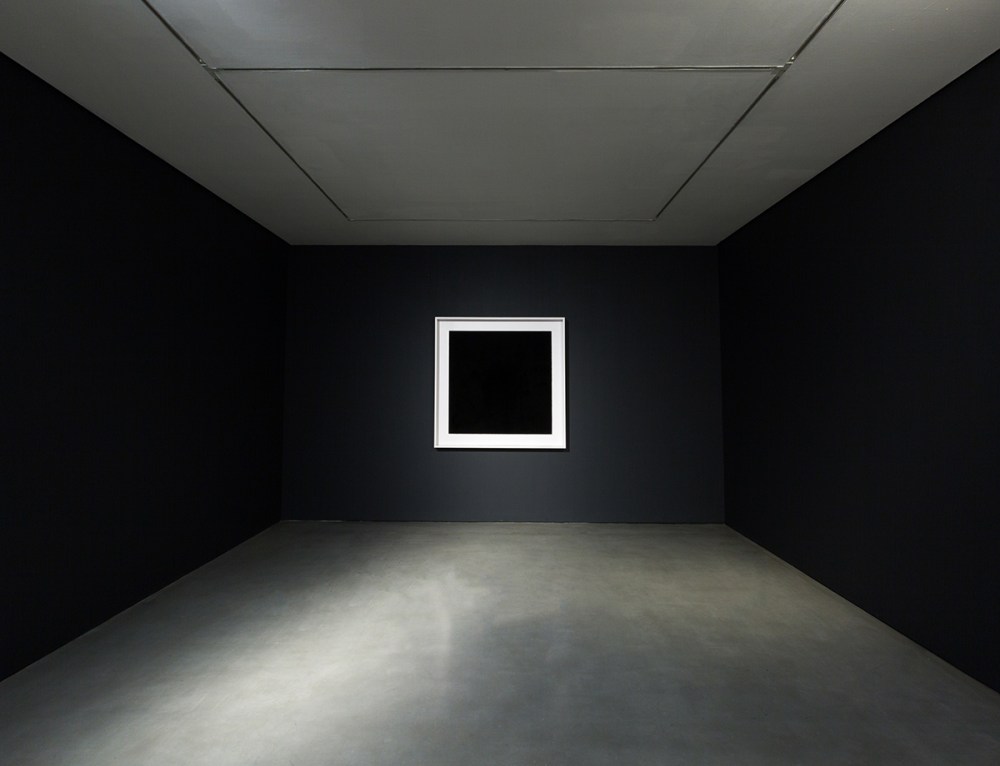
Read moreThe work Belgian artist Frederik De Wilde is showing, in a dimly lit basement just off London’s Oxford Street, is a black square (see pic, above). Not just any black, either. Viewing NanoBlck-Sqr #1 for the first time, it’s hard to decipher what you’re looking at. You might instead find yourself contemplating phosphenes – the glowing blobs that appear before your eyes when you stare into utter darkness.
De Wilde’s work is made of carbon nanotubes fixed to an aluminium “canvas” by means he won’t disclose. These, the blackest substance ever made, reflect less than 0.01 per cent of the light that hits them; black paint reflects up to 10 per cent.
…
De Wilde wants to apply his “nanoblack” to three-dimensional forms: its apparent abolition of depth may yield startling effects. But he isn’t the only artist exploring the outer limits of blackness. He bridles when I refer to plans for sculptor Anish Kapoor to use “vantablack”, which is claimed by its maker, Surrey NanoSystems, to be even blacker. It seems the quest for the ultimate portrait of nothing is a competitive one.

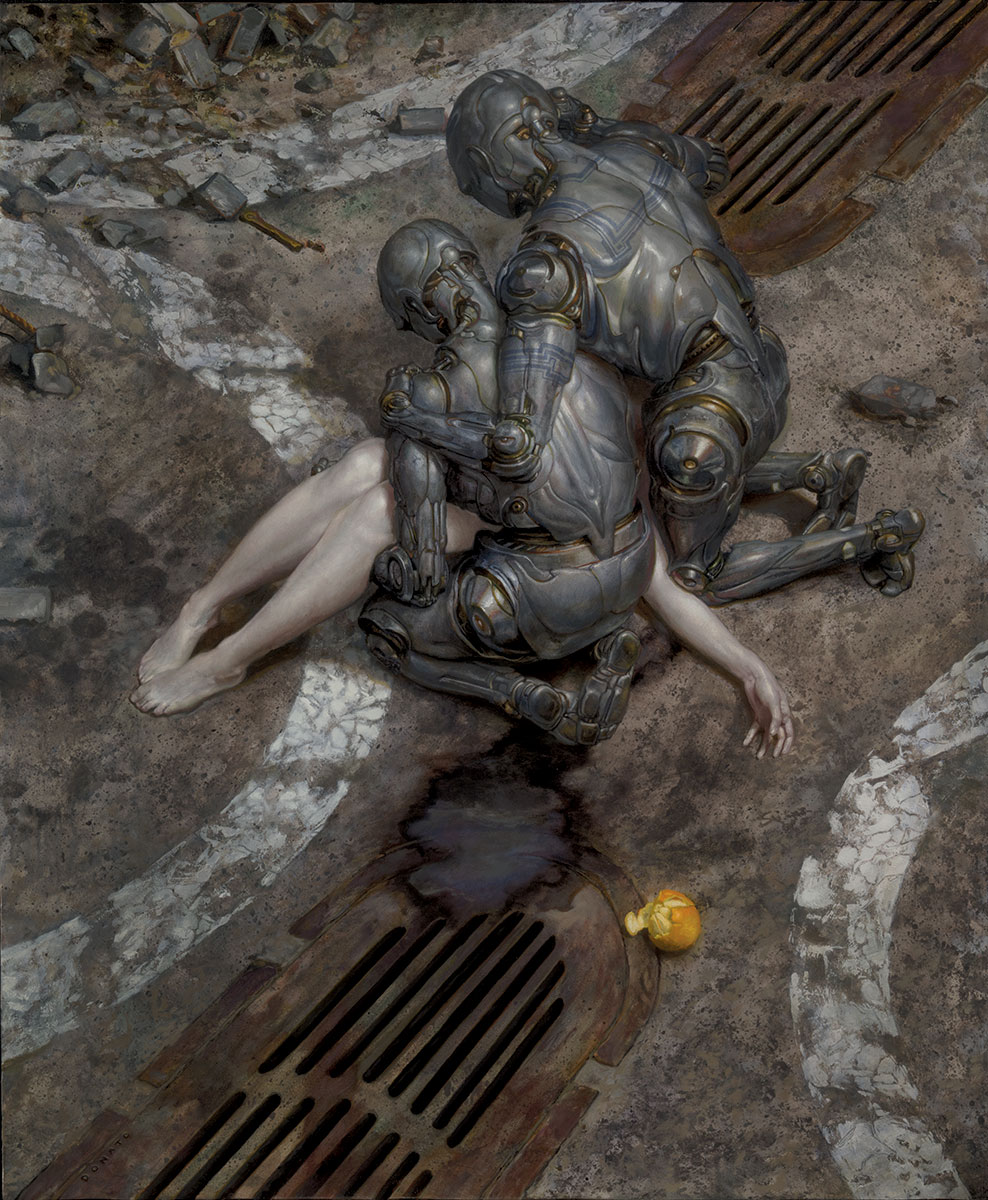
Read moreDOLORIFIC
[adjective]
causing pain or grief; causing great sadness or sorrow.
Etymology: from Late Latin dolorificus, from dolor, “pain” + facere, “to make”.


Read moreNew Delhi has set up a three-mile exclusion zone around the island to protect its inhabitants, known as the Sentinelese, who through violent seclusion have remained possibly the most genuinely isolated peoples in the world, likely for thousands of years.
…
Using DNA from the surrounding tribes and the unique isolation of the Sentinelese language, we suspect that the Sentinelese’s singular genetic lineage could go back as far as 60,000 years. That would make them perhaps some of the most direct and uniquely isolated descendants of the first humans to leave Africa that have ever been located. Any geneticist would give an eyetooth for a chance to look at Sentinelese DNA to better understand the history of the human race. Not to mention the fact that the Sentinelese survived the 2004 Indian Ocean tsunami somehow, which devastated the surrounding islands and wiped out much of their own terrain. They remained unscathed, hiding on higher ground as if they knew the storm was coming, suggesting they retain esoteric knowledge of the weather and environment that we could possibly learn from. All of this is worth protecting and preserving, even if these safeguards ironically mean we will not have access to it as scholars. But if and when the Sentinelese choose to accept contact, then the world at large will surely benefit culturally and scientifically from their previous isolation.
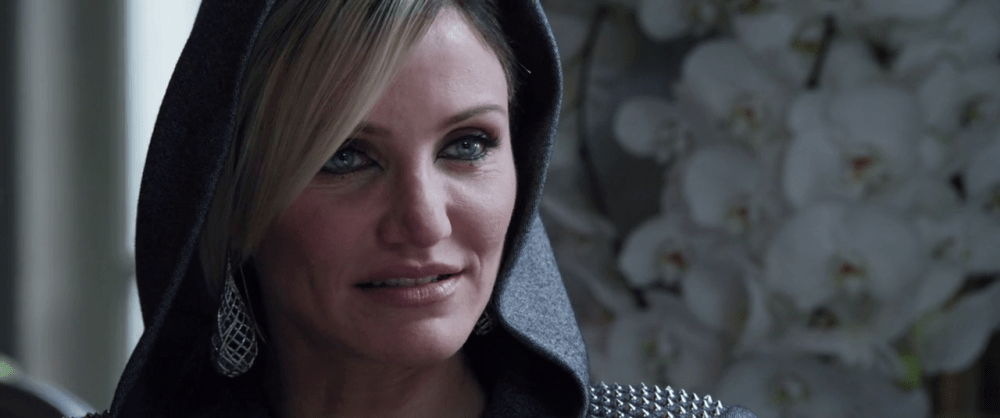
The hunter has grace, beauty, and purity of heart to be found nowhere else. You can make no distinction between what they are and what they do. And what they do is kill. We, of course, are another matter. It is our faintness of heart that has driven us to the edge of ruin. Perhaps you won’t agree, but nothing is crueller than a coward. And the slaughter to come is probably beyond our imagining.
Read more The Committee to Nuke Elysium